ExploreChileliving unforgettable adventures


Tarapacá
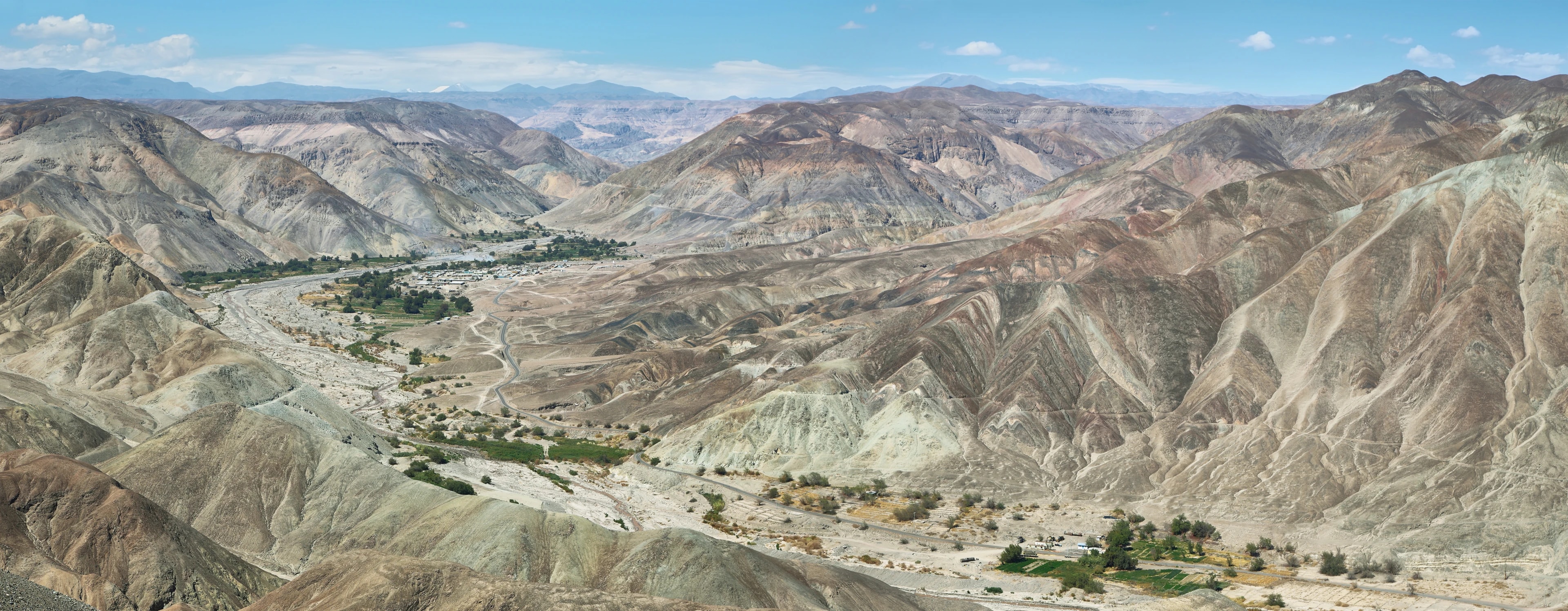
Tarapacá is a land of extremes, from the bone-dry Atacama pampa to the steaming geysers of Pica and the turquoise salt lakes of the high plateau. Iquique, its capital, clings to a narrow strip between towering coastal cliffs and the Pacific, offering world-class paragliding and duty-free shopping in the Zofri district.
Audio version available
Iquique, Between Cliff and Sea
Wedged between a sheer 600-metre escarpment and the Pacific Ocean, Iquique is one of Chile's most dramatically located cities. The sand dune of Cerro Dragón, towering above the southern suburbs, provides the launch point for paragliders who soar on thermals with the entire city spread below them, a sight rated among the world's top ten urban paragliding experiences.
Down at sea level, Playa Cavancha curves in a gentle arc of golden sand lined with restaurants and surf schools, while the Baquedano pedestrian street in the old quarter preserves Georgian-style timber mansions from the nitrate era, their ornate balconies a reminder of a time when Iquique was one of the wealthiest cities in South America.
The Zofri duty-free zone draws shoppers from across northern Chile and neighbouring Bolivia.
The Nitrate Ghost Towns
In the late 19th century, the Atacama pampa behind Iquique was the engine of the global fertiliser industry. Dozens of oficinas salitreras, nitrate processing plants and their company towns, sprang up across the desert, housing tens of thousands of workers in conditions that ranged from paternalistic comfort to brutal exploitation.
When synthetic nitrate was invented in the early 20th century, the industry collapsed almost overnight. Today, the UNESCO World Heritage sites of Humberstone and Santa Laura stand as haunting monuments to that era: roofless theatres, empty swimming pools, and rusting machinery preserved by the hyper-arid climate.
Walking through their silent streets is one of Chile's most powerful historical experiences, offering a window into the social struggles, immigrant waves, and economic forces that shaped modern northern Chile.
Oasis Towns and Highland Villages
Inland from the coastal desert, the oasis town of Pica is a startling splash of green amid the brown pampa. Fed by underground aquifers, its orchards produce the limes and mangoes that flavour the region's cuisine, and its public thermal pools offer a blissful soak after the dusty drive from Iquique.
Further east and higher up, the altiplano town of Colchane sits on the Bolivian border at over 3,700 metres, home to Aymara communities who celebrate the Fiesta de la Virgen del Carmen with days of brass-band music, elaborate costumes, and ritual dances.
The Salar de Huasco, a national park since 2010, protects a vast salt flat dotted with flamingos, Andean gulls, and the endangered suri, a South American rhea found only at high altitude.
Giant Geoglyphs and Ancient Trade Routes
The hillsides of Tarapacá are adorned with some of the largest and most enigmatic geoglyphs in the world. The Giant of the Atacama, a 119-metre anthropomorphic figure etched into a hillside near Huara, is the biggest prehistoric representation of a human being on the planet.
Nearby panels show caravans of llamas, geometric patterns, and what appear to be astronomical calendars. These images were created over thousands of years by cultures that used the pampa as a vast trade corridor linking the Pacific coast to the altiplano and the Amazon basin beyond.
The pre-Inca pukará (fortress) of Cerro Pintados overlooks a hillside covered with nearly 400 individual geoglyphs, forming one of the densest concentrations of rock art in South America.
Waves, Wind, and Coastal Adventure
The Tarapacá coastline is wilder and less developed than many visitors expect. South of Iquique, the beaches of Playa Blanca and Tres Islas offer superb conditions for kitesurfing and windsurfing, with reliable thermal winds and warm water year-round. Pisagua, a tiny port clinging to the cliffs north of the city, was once a bustling nitrate-era harbour and later a dark chapter in Chile's history as a political detention camp during the dictatorship, today it is a quiet fishing village with a restored wooden theatre and some of the most pristine diving waters on the northern coast.
The offshore Humboldt Current brings rich marine life, and local fishermen supply the cevicherías of Iquique with corvina, congrio, and the region's prized camarón de río, a freshwater shrimp from the desert rivers that is considered a delicacy throughout Chile.
Points of Interest
Cities
Cities
Huara
A small pampa town on the Pan-American Highway, once a railway stop of the saltpetre era and now the turn-off for the road that climbs east to Colchane, Isluga and the Bolivian border. About 14 km away, on the slopes of Cerro Unita, lies the Gigante de Atacama, a geoglyph more than 80 m tall and one of the largest prehistoric human figures in the world. It was laid out by the region's pre-Hispanic peoples, most likely as a landmark for the caravans crossing the desert.
Cities
Iquique
The capital of Tarapacá (around 200,000 people) is squeezed between the Pacific and a coastal cliff that rises straight up to Alto Hospicio. The saltpetre boom left a district of timber mansions along Calle Baquedano and the Teatro Municipal of 1889, and the 1879 naval battle offshore made Arturo Prat a national hero. Today the city lives on mining, the ZOFRI duty-free zone, surfing at Cavancha beach and paragliding off the slopes above town.
Cities
Pica
An oasis town at about 1,300 m, where springs rising from the desert floor water orchards of mangoes, guavas and the small, fragrant limes that Chileans consider essential for a pisco sour. It was settled long before the Spanish arrived, and colonial vineyards once flourished here too; the old wine press in neighbouring Matilla survives as a national monument. Visitors come for the fruit, the 19th-century church of San Andrés and the Cocha Resbaladero, a thermal pool on the edge of town.
Cities
Pisagua
A near-empty port at the foot of a sheer coastal cliff, which in the 1890s shipped saltpetre from the pampa and briefly counted several thousand inhabitants. Its wooden theatre of 1892 and the clock tower on the hill still stand. The town also carries a darker history: it served as a detention camp in 1948 and again after the 1973 coup, and the mass grave uncovered in 1990 became one of the defining discoveries of Chile's return to democracy.
Cities
Oficina Salitrera Santiago Humberstone
A saltpetre company town opened in 1872 and closed in 1960, once home to several thousand workers and their families in the middle of the Pampa del Tamarugal. Its theatre, school, market, church and swimming pool survive almost intact, giving an unusually complete picture of life in the nitrate era. Together with the neighbouring Santa Laura works it was declared a UNESCO World Heritage Site in 2005, and it lies less than an hour's drive inland from Iquique.
Daily 09:00–18:00 · CLP 5,000
Tours · Parking · Visitor center
Natural Reserves
Natural Reserves
Cocha Resbaladero
A natural pool cut into the rock on the edge of Pica, fed by a spring that keeps the water at around 33 °C all year. Shaded by trees and surrounded by the town's fruit orchards, it is the oasis's best-known attraction and a welcome contrast to the desert that begins a few metres away. Changing rooms and food stalls sit beside it, and it fills with families from Iquique on summer weekends.
Daily 08:00–19:00 · CLP 4,000
Swimming · Thermal baths · Picnic area · Parking
Natural Reserves
Parque Nacional Salar del Huasco
A high Andean salt flat at about 3,800 m, where shallow lagoons ringed by white salt crust host three species of flamingo (Chilean, Andean and James's) alongside vicuñas, rheas and other altiplano wildlife. A Ramsar wetland since 1996, it is now a national park protecting both the lagoons and the aquifer that feeds them. The access road runs east from Pica, and there are no services on site.
Wildlife · Hiking · Viewpoint
Natural Reserves
Parque Nacional Volcán Isluga
Created in 1967, this park covers about 175,000 ha of altiplano on the Bolivian border, crowned by the Isluga volcano at some 5,500 m. Aymara communities still herd llamas and alpacas here, and the village of Isluga, with its whitewashed adobe church and bell tower, comes alive mainly for religious festivals. Vicuñas, flamingos and vizcachas are common, and the hot springs at Enquelga are a welcome stop in the cold.
Hiking · Wildlife · Thermal baths · Viewpoint
Natural Reserves
Reserva Nacional Pampa del Tamarugal
A reserve protecting the forests of tamarugo, a tree endemic to this pampa that survives in one of the driest places on Earth by sending its roots down to the groundwater. Much of the woodland was planted in the 1960s to restore the forest cut down for fuel during the saltpetre era. The reserve also takes in Cerros Pintados, a hillside covered with hundreds of pre-Hispanic geoglyphs, and borders La Tirana, whose July festival draws huge crowds of dancers.
Hiking · Wildlife · Picnic area · Parking
Natural Reserves
Termas de Chusmiza
A small Aymara settlement at about 3,200 m in the Tarapacá pre-cordillera, built around hot springs that have been used for centuries. Its mineral water is also bottled and sold across northern Chile. In 2009 the Supreme Court upheld the community's ancestral rights to that water, a landmark ruling for indigenous water rights in Chile.
Thermal baths · Lodging · Parking
Natural Reserves
Termas de Lirima
Remote hot springs at close to 4,000 m, beside the small Aymara village of Lirima in the highlands east of Pica. A handful of rustic pools look out over a wide altiplano valley, and the nearest services are hours away, so visitors come by 4x4 and usually camp. The reward is a hot soak under some of the clearest night skies in Chile.
Thermal baths · Camping · Viewpoint
Natural Reserves
Termas de Mamiña
An Aymara village at about 2,700 m, perched on a ridge above green terraced valleys and long known for its hot springs, with several bathhouses fed by different sources. Its mud baths, the Barros Chinos, are said to be good for the skin and joints. Above the village stands the church of San Marcos with its twin bell towers, one of the most striking in the region.
Thermal baths · Lodging · Restaurant · Parking