ExploreChileliving unforgettable adventures


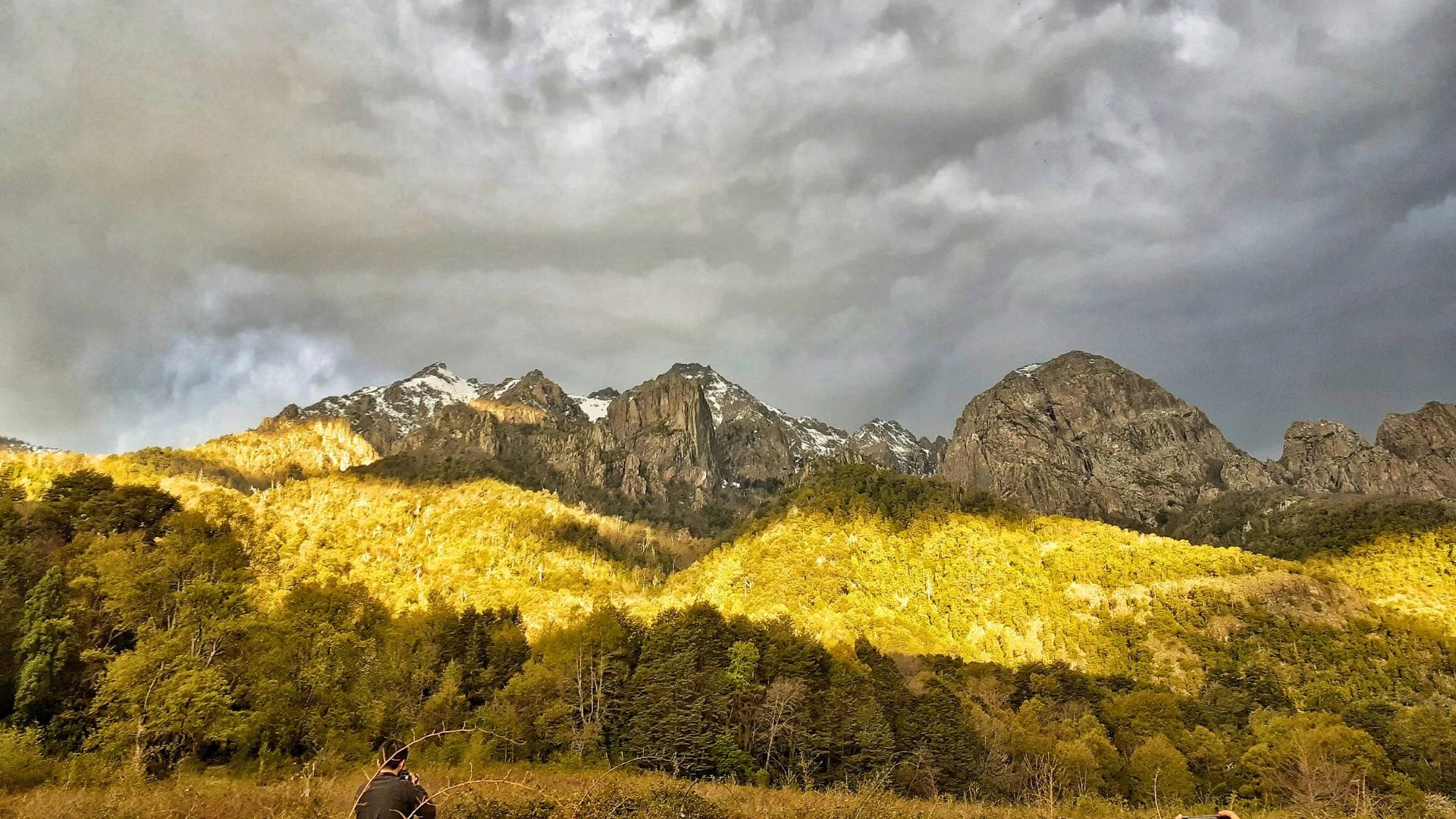
Ñuble
Chile's newest region, created in 2018, Ñuble has quickly established its own identity rooted in agriculture, hot springs, and a deep connection to the country's independence era. Chillán, the capital, is the birthplace of Bernardo O'Higgins and home to a vibrant market and artisan food culture.
Audio version available
Chillán, Markets, Murals, and O'Higgins
Chillán is a city that feeds both body and soul. Its Feria de Chillán is one of Chile's largest and most colourful open-air markets, where vendors sell artisan cheeses, longaniza sausages, handwoven blankets, and wooden crafts alongside mountains of fresh produce from the surrounding farms. The city is the birthplace of Bernardo O'Higgins, Chile's founding father, while the nearby village of Ninhue is the cradle of Arturo Prat, the naval hero of the War of the Pacific, two Ñuble figures whose legacy gives the region an outsized historical significance.
The rebuilt cathedral, a striking modernist structure with a 36-metre parabolic arch, stands at the city's heart, while nearby the Escuela México, donated by Mexico after the devastating 1939 earthquake, houses the celebrated mural "Muerte al Invasor" painted in the early 1940s by David Alfaro Siqueiros alongside works by Xavier Guerrero.
Chillán is also known for its cuisine: chancho en piedra (stone-ground tomato and chilli salsa), pastel de choclo (corn casserole), and sopaipillas are prepared here with a regional flair that Chileans regard as some of the most authentic in the country.
Termas de Chillán, Hot Springs and Ski Slopes
High in the Andes above the city, the Termas de Chillán resort sits on the flanks of the active Nevados de Chillán volcanic complex at around 1,750 metres. In winter, its ski area offers over 30 runs through native lenga forest, with some of the longest vertical drops in central Chile and reliably dry snow. In summer, the same slopes become a network of hiking and mountain-biking trails through wildflower meadows, and the star attraction, the natural thermal pools fed by volcanic hot springs, operates year-round.
The most famous pool, the hot waterfall known as the Termas Valle Hermoso, cascades down a fern-covered cliff into a steaming natural basin.
Nearby, the fumaroles and sulfur vents of the Chillán volcano provide a visceral reminder that the earth here is very much alive. The road up to the resort passes through dense native forest, with views back over the central valley that are particularly stunning in autumn.
Old Vines and Organic Wine
Ñuble's wine scene is one of the most exciting emerging stories in Chilean viticulture. The region's hot, dry summers and old dryland vineyards, some planted over 150 years ago with País, Cinsault, and Moscatel grapes, have attracted a new generation of natural and minimal-intervention winemakers who see in these ancient vines a unique expression of terroir.
Villages like Portezuelo, Guarilihue, and Quillón are home to small family vineyards where grapes are still hand-harvested and pressed in traditional lagares (stone troughs). Winemakers from across Chile and abroad have begun sourcing fruit from these plots, producing wines of remarkable character: light, aromatic, and distinctly Chilean in a way that the international varieties further north cannot replicate.
The annual Vendimia de Ñuble and local wine festivals are intimate affairs, far from the polished tasting rooms of Colchagua, offering a genuine connection to the people who farm these vines.
Cobquecura and the Coastal Wilderness
The Ñuble coast centred on the village of Cobquecura is one of central Chile's most unspoiled stretches of shoreline. Dramatic rock formations, including the Piedra de la Iglesia, a natural stone cathedral sculpted by waves, punctuate long beaches of dark sand where southern sea lions haul out in noisy colonies.
The Lobería de Cobquecura is one of the few mainland sea lion breeding colonies on the Chilean coast, and the surrounding rocky platforms are rich in marine life. The village itself is a quiet place of adobe houses and wooden churches, designated a Zona Típica for its traditional architecture.
In summer, families from Chillán and Concepción flock to the beaches, but for most of the year Cobquecura maintains a contemplative solitude, a place of big skies, crashing surf, and the cries of pelicans and cormorants circling the offshore rocks.
Rivers, Reserves, and Rural Heritage
The Ñuble River, which gives the region its name, carves a green corridor from the Andes through the central valley to the coast, irrigating orchards, rice paddies, and vineyards along its course. The Reserva Nacional Ñuble, high in the cordillera near the Argentine border, protects native araucaria and lenga forests, Andean condors, and mountain viscachas in a landscape of volcanic peaks and glacial lakes that is far less visited than comparable parks in the Lake Region further south.
In the foothills, the village of Quinchamalí keeps alive a centuries-old tradition of blackware pottery, distinctive dark clay figures of guitars, pigs, and the iconic guitarrera (guitar-playing woman) that are recognised as Intangible Cultural Heritage.
This craft, passed from mother to daughter for generations, symbolises the deep rural roots that define Ñuble, a region that, despite being Chile's youngest, carries some of its oldest and most cherished traditions.
Points of Interest
Wineries
Wineries
Viña Mujeres Itata
Viña Mujeres Itata sits at Fundo Ñipas, in the El Barco sector of Ránquil (Ñuble Region), deep inside the historic Itata Valley, an area known for its centennial vines and its long, quiet relationship with the land. The vineyard traces its roots to the 1930s, when Don Bernardino Alarcón Ramírez began cultivating grapes here; three generations on, his granddaughter María Loreto Alarcón has taken the project in a distinctive direction. She named it Viña Mujeres Itata, 'Itata Women', and built it around the women who do the work. Most of the team is female. Women lead the vineyard, the cellar, the harvest, the bottling line, and the visitor programme; the door is also intentionally open for other women to come in to learn, collaborate, or share their own knowledge. The project is part of a broader Cooperativa de Mujeres del Valle del Itata, seven formal members working in a wider network of around fifty women across the valley, buying together, selling together, and lifting each other up. The estate is built around heritage vineyards, old, dry-farmed parras characteristic of Itata, surrounded by native forest, meadows, and small streams. The wines, including the blend Chica de Humo, are made on-site at small scale and presented as expressions of the place and of the women who make them. The signature visitor experience, 'Conexión Ancestral de la Parra a la Copa' (Ancestral connection, from vine to glass), won Sernatur's regional Best Enotourism Experience award. Visits are intimate and pre-arranged through María Loreto directly: guided vineyard walks, sensory tastings, paired meals from breakfast through to sunset, group events, and weddings. The estate is pet-friendly and traversed by walking trails.
By appointment
Wine Tasting · Shop
Wineries
Vinos de Patio
Vinos de Patio is one of the small, distinctive projects that have given the Itata Valley its current second life. Five young winemakers, Herman Díaz, Ronald Vera, Elier Ortiz, Luis Lagos, and Pablo Solís, with Edgardo Ortiz as president, joined forces around the family parras they had each inherited, and set out to take the centuries-old craft of the valley in a new direction. The estate sits in Guarilihue, in the Ñuble Region, on a small three-hectare patch of the Itata's complex country of hillsides, clay-rich mountains, rivers, and nearby coast. The name says everything: 'patio wines'. It points to the home patios where each of these families started making wine generations ago, long before anyone imagined a label or a tasting room. The owl that appears on the bottles and around the estate is the project's emblem, local lore says owls have always watched over the ancestral wineries of Itata, including the Jesuit cellars built here in the sixteenth century. The vineyard works five varieties that are the soul of the Itata: País, Cinsault, Carignan, Moscatel de Alejandría, and Torontel. From those, the team makes around ten wines in deliberately small quantities, each one a different angle on the same terroir. The winery was a 2018 Sernatur 'Más Valor Turístico' winner and has built a visitor offering to match. Visits are by reservation (24 h notice) and start with a traditional countryside breakfast, local fruits, clay-oven bread, followed by vineyard walks, tastings, group meals, and patrimonial tours of the historic Jesuit cellars nearby. Lunches, dinners, and longer stays can be arranged directly with the team.
By appointment
Wine Tasting · Shop
Wineries
Viña Jardúa
Viña Jardúa is a small project run by two cousins, Carlos Jardúa, an agronomist, and Rolando Carrasco Jardúa, a psychiatrist, who decided to pick up the family thread again. Their grandfather Jardúa emigrated from Syria and made and sold wine here in Chile; the current generation took up the same family name and the same starting point, and named their first wine 'Reinicio', Restart. The bodega sits near Chillán, in the Huape sector of the Itata Valley, Región de Ñuble. The Cinsault, the project's flagship, comes from Ñipas (sector La Raya), from dry-grown vines whose exact age nobody knows, over seventy years, going by the history of the owners. On the family's own hectare in Huape they have planted Sauvignon Blanc, Tempranillo, and Garnacha, all still maturing, not yet released. The way they work is deliberately stripped back. Grapes are hand-harvested. The wine never touches wood: it ferments and rests in fibreglass, is bottled, and ages a couple of years more before going out. The 2016 Cinsault was made in just 1,300 bottles. Edgardo Candia, an experienced Itata winemaker, advises the project. Visits are by appointment and built around tastings, food pairings, and conversation. The family is preparing a sales room and event space to anchor the project as a wine hub for Chillán, a place where the Itata Valley can be tasted alongside the food and stories of the territory.
By appointment
Wine Tasting · Shop
Wineries
Viña El Guindo
Viña El Guindo sits in Guarilihue Centro, in the commune of Coelemu, the inner heart of the Itata Valley, Región de Ñuble. The vineyard was planted in the 1930s by Apolonides Sanhueza; today his grandson Pablo Solís Sanhueza runs it as the third generation, making the wines and welcoming visitors himself. The project belongs to the new wave of small Itata producers working as 'vinos de autor', author wines in deliberately small batches, where the winemaker's hand is on every bottle. Pablo is also one of the five winemakers behind the nearby Vinos de Patio collective, which shares the same patrimonial logic of the valley. The vines climb the dry hillsides typical of Guarilihue, and the cellar covers a broad palette of varieties native to the territory. Among the wines is the Late Harvest 'Mutilla GranDiosa', which has carried the bodega's name beyond the Itata. In 2025, El Guindo was among ten Itata family wineries that took home fourteen gold medals at the Catad'Or competition, a quiet landslide that confirmed how much weight this corner of Chile now carries in the wine world. Visits are by appointment, coordinated directly with Pablo. The programme covers vineyard walks, tastings of the current range, and direct sales from the cellar. The bodega is at Km 7.7 of the Guarilihue road, reached from Chillán along Route O-170.
By appointment
Wine Tasting · Shop
Wineries
Viña Hermanos Díaz
Viña Hermanos Díaz is a small family project from Guarilihue Alto, in the heart of the Itata Valley, Región de Ñuble. Herman Díaz, the fourth generation of a Guarilihue wine family, leads the bodega today. He trained as an industrial mechanic, but grew up among his family's vineyards and learned the trade from the older generations, who for decades sold their fruit to bigger commercial wineries rather than bottling under their own name. The Hermanos Díaz wines deliberately recover that other half of the story: the family's own hand on the bottle. The bodega works with the emblematic Itata varieties, Cinsault, Torontel, and Moscatel de Alejandría, drawn from old, dry-grown vines, some of them more than a century old. The approach is artisanal and small-batch, with a strong sense of preserving the patrimonial wine culture of the valley. Herman is also one of five winemakers behind the Vinos de Patio collective, which opened its public shop and visitor cellar in Guarilihue Alto in 2022 with support from CORFO. Each member contributes wines to the shared catalogue, and the Hermanos Díaz bottles can be tasted there alongside the work of Luis Lagos, Ronald Vera, Elier Ortiz, and Pablo Solís. In 2025 the bodega was among ten Itata family wineries that brought home fourteen gold medals at the Catad'Or competition. Visits are by appointment and built around vineyard walks, tastings of the current range, and conversation with Herman himself.
By appointment
Wine Tasting · Tours · Shop
Wineries
Viña Entre Viñedos
Viña Entre Viñedos is a family bodega in Guarilihue, in the inner Itata Valley, Región de Ñuble. It is run by Herminda Torres, who inherited both the land and the winemaking craft from her father and has continued the project as a small, very personal operation among the family's old vines. The vineyard is built on century-old Cinsault, ungrafted, dry-grown, watered only by rain on the granitic hillsides typical of Guarilihue. From those vines Herminda makes 'vinos de autor' in deliberately small batches, treating each bottle as an extension of the family's history rather than as part of an industrial run. What sets Entre Viñedos apart is the visitor offering, which is closer to a country retreat than a traditional cellar door. The estate includes a small lodging, a swimming pool, a colonial dining room, a quincho for outdoor gatherings, and hydromassage and wellness treatments, all built around the tasting cellar, so the wines are met inside a longer afternoon of food, walks among the vines, and the slow rhythm of the valley. Visits and stays are by appointment, coordinated directly with Herminda. The bodega is reached from Chillán along Route O-170.
By appointment
Wine Tasting · Tours · Shop
Wineries
Viña Prado
Viña Prado was founded in 1901 by Abraham Prado Marín, known in the family as 'El Tatita', on the Fundo La Posada in Portezuelo, Región de Ñuble, in the heart of the Itata Valley. The estate takes its name from the historic posada, the cart stop that once welcomed travellers on the road to Portezuelo; the bodega and its old vines still sit on that same ground. Four generations later, the project is led by the sisters Soledad and Daniela Prado Cornejo, with the support of their father Miguel Prado Petermann, a former LADECO pilot and co-founder of Farmland School, who himself took up the administration of the estate roughly forty-five years ago. The family thread runs deep: Emilio Prado Le-Fort, the grandfather and a physician, introduced modern bacteriological techniques into the winery in 1946, a quietly precocious move that still shapes the way the wines are made today. The vineyards are patrimonial: century-old vines, dry-grown, worked with ancestral knowledge rather than irrigation. The cellar leans on natural winemaking, minimal intervention, native yeasts, no chemicals, unfiltered. The portfolio includes Vino Pipeño La Posada, commercially launched in 1982 and one of the bodega's signatures, alongside wines from the family's heritage cepas of the Itata Valley. Visits are by appointment and built around vineyard tours, tastings in the historic sala de degustación, direct sales from the bodega's shop, and the option to host private events on the estate.
By appointment
Wine Tasting · Tours · Restaurant · Shop
Wineries
Viña Raíces de Chintú
Viña Raíces de Chintú is a small family bodega in Las Lajuelas, in the commune of San Nicolás, part of the dry-farmed Itata Valley in the Región de Ñuble. The project is run by José Sepúlveda and his wife, with their daughter Dominga as the family's quiet horizon. The roots reach far back: the oldest vines were planted in 1870, and the bodega itself was built by José's grandfather in 1920. Four generations later, the operation has stayed at human scale. The vineyards are dry-grown in the secano interior of Itata; the winery works without irrigation and leans on traditional, sustainable practices and natural winemaking, the way it has always been done in this corner of the valley. The cellar's bottlings are deliberately small and personal. El País Real is a robust but refined red built from old País vines; Flor de Espino is a delicate Moscatel de Alejandría white; and La Patrona, one of the first bottlings of the rare San Francisco grape from the Itata, captures a varietal that almost nobody else is making here. A collaborative cuvée called El 60, made with Viña María Carlota, blends 60% Cinsault with 40% País. The enoturism programme is shaped around real countryside hospitality: a family lunch at the table, guided tastings paired with cheeses and dried fruit, walks among the heritage vines, and a visit to the historic bodega. Raíces de Chintú was a semifinalist for Best Emerging Winery of the Ñuble Region at the 2024 Enoturismo Chile awards. Visits are by appointment, coordinated directly with the family.
By appointment
Wine Tasting · Tours · Restaurant · Shop
Wineries
Viña Cortez
Viña Cortez is a family bodega in the Fundo Las Pataguas, in the sector Los Maquis of Portezuelo, Itata Valley, Región de Ñuble. It is the third generation of a Cortez family of winemakers: Don Bernardo Cortez learned the trade from his father and grandfather and today runs the project with his wife Marcia Bustos and son Javier Cortez, with technical support from the enologist Víctor Vargas. For most of its history the family worked the vineyards as a bulk-wine producer, sending grapes and barrels off into the wider Itata trade. The turning point came in 2012, when the bodega began bottling under its own label and stepped fully into the new wave of patrimonial Itata wineries, small batches, quality-first, all grapes harvested from the family's own vines and from the surrounding valley. The Cortez wines have travelled fast. The Cuarzo Cinsault 2022 took the Gran Oro at the 12th Concurso del Vino del Valle del Itata, the top prize in the competition organised by Indap Ñuble, and the Cuarzo País 2022 won Oro for Best País Wine in the same edition, a strong showing for a relatively young label. The bodega keeps an active wine tourism programme. Visits are by appointment and cover guided cellar and vineyard tours, tastings paired with regional food, and countryside lunches. The estate also hosts two anchor festivals each year, the Fiesta de la Vendimia (harvest festival) in April and the Fiesta del Camarón (river-shrimp festival) in July, and is available as a private events venue.
By appointment
Wine Tasting · Tours · Shop
Wineries
Viña Männle
Viña Männle began in 1987, when Heinrich Männle, a young German enologist from Durbach, Baden, settled in Chile. He had first come in 1985 for an internship in Curicó at twenty-seven, fell in love with the country and with a Chilean woman he later married, and decided to stay. Behind him stood the family wine tradition of Weingut Andreas Männle in Durbach: his father Andreas, his mother Hildegard, and a tightly knit Black Forest winemaking community. In Chile, Heinrich studied the country's wine regions in detail before choosing the southern-central interior, the heart of the Itata Valley, as the place to plant his own project. The bodega is based in Bulnes, twenty kilometres from Chillán, at Ruta 148 km 1, Sector La Piscina. The vineyards are split between two very different sites. Magdalena Alto carries old vines, 50 to 70 years old, exposed to maritime influence from the Pacific, perfect ground for Moscatel de Alejandría and Cinsault. Huape, deeper inland in the intermountain valley, brings warmer temperatures and supports the Bordeaux-rooted reds: Carmenere, Cabernet Sauvignon, Syrah, and Petit Verdot. Heinrich also keeps long-standing contracts with growers across Coelemu, Quillón, Huape, Larqui, and other corners of the valley. Today the project is shared between Heinrich and his son Martin Männle, also an enologist, and the third generation of the family to make wine. The portfolio mixes the everyday and the special: Carmenere Reserva and the regular varietals on one side, and the limited barrel releases like Huape Cabernet Sauvignon 2014 and Reminiscencias Cinsault 2016 on the other. Beyond wine, the bodega also produces Beeren Männle, fruit juices made from local blueberries, raspberries, and blackberries using winemaking techniques carried over from the cellar. Visits are by appointment and cover the cellar, the vineyards, tastings of the current range, and direct sales from the bodega shop.
By appointment
Wine Tasting · Tours · Shop
Wineries
Vinos del Manto
Vinos del Manto is a family bodega in Quillón, in the southern reach of the Itata Valley, Región de Ñuble. The family has worked vines on this ground for more than a hundred and fifty years, which puts the project among the oldest continuous winemaking lineages of the valley. The house focuses on the patrimonial varieties of the Itata, with País as its undisputed centre. From the same vineyard the bodega makes a still País and an Espumante País Demi sec, an unusual sparkling expression of a grape that, until recently, was poured almost entirely in jug form. Both bottlings took gold medals at the 3rd Concurso de Vinos de Quillón in 2023, a strong vote of confidence from the local wine community. The approach is deliberately small in scale and respectful of the land, sustainable practices, traditional cellar work, and a long memory of the seasons of this corner of the valley. Visits are by appointment and built around guided tours of the vineyards, tastings of the current range, and local food alongside the wines. The bodega is reached from the centre of Quillón.
By appointment
Wine Tasting · Tours · Shop
Cities
Cities
Chillán
Capital of the Ñuble Region (population around 190,000) and one of Chile's most history-soaked cities, Bernardo O'Higgins, the father of Chilean independence, was born here in 1778. The Mercado de Chillán is one of the country's great food markets, famous for the local longaniza sausage and traditional crafts, and the Escuela México holds a pair of huge murals painted in 1942 by David Alfaro Siqueiros and Xavier Guerrero. East of town, the Nevados de Chillán ski centre and hot springs make the city a year-round mountain gateway.
Cities
Quillón
Small agricultural town of around 17,000 in the Ñuble Region, set in a rolling landscape of vineyards, almond orchards and the artificial Laguna Avendaño. Quillón sits inside the Itata Valley wine zone, working the patrimonial País, Cinsault and Moscatel de Alejandría grapes, and is best known beyond the region for its summer lakeshore beaches.
Cities
Quinchamalí
A small village (population around 5,000) south of Chillán, world-famous for its cerámica negra, the smoke-fired black pottery worked by women for generations using techniques passed down from pre-Hispanic Mapuche communities. UNESCO inscribed the Quinchamalí and Santa Cruz de Cuca pottery tradition on its Intangible Cultural Heritage list in 2022.
Natural Reserves
Natural Reserves
Reserva Nacional Ñuble
CONAF reserve of around 75,000 hectares created in 1978 in the high Andes between the Maule and Itata watersheds. Three sectors (Los Lleuques, Bullileo, Pichi-Bullileo) protect coigüe, lenga and araucaria forest, the headwaters of several rivers, and key populations of huemul deer, pumas and Andean condors.
Dec–Mar 9:00–17:30 · $5,000 CLP
Hiking · Wildlife · Camping · Viewpoint
Natural Reserves
Centro de Esquí y Termas de Chillán
Ski and thermal resort on the flanks of the active Nevados de Chillán volcanic complex (3,212 m). Over 30 ski runs in winter through native lenga forest, natural thermal pools open year-round, and a network of summer hiking and mountain-biking trails.
Ski Jun–Oct · Thermal baths year-round
Ski · Thermal baths · Lodging · Restaurant · Parking
Natural Reserves
Santuario de la Naturaleza Lobería de Cobquecura
Coastal sanctuary just off the village of Cobquecura, where one of the few mainland South American sea-lion breeding colonies in Chile barks and basks on a cluster of offshore rocks. The colony is easily watched from the beach all year, peaking in summer when pups are born.
Open all year · Free
Wildlife · Viewpoint · Parking
Natural Reserves
San Fabián
Andean valley around the upper Río Ñuble, near the Argentine border. The Ñuble River carves through coigüe and oak forest, and the river beaches around the village of San Fabián de Alico are popular for camping, fly fishing and summer swimming.
Open all year · Free
Hiking · Camping · Fishing · Swimming
Natural Reserves
Refugio de Vida Silvestre San Fabián de Alico
Andean wildlife refuge east of the village of San Fabián, covering the high reaches of the Río Ñuble in some of Ñuble's least-trodden cordillera. Native forest, granite peaks and braided rivers, accessible by gravel road in summer.
Open all year · Free
Hiking · Camping · Fishing
Natural Reserves
Santuario de la Naturaleza Iglesia de Piedra
Massive sea-carved stone cathedral on the Cobquecura beach, declared a Santuario de la Naturaleza for its arches, nave-like chamber and the offshore rocks where pelicans and cormorants gather. Walkable from the village at low tide, free year-round.
Open all year · Free
Hiking · Viewpoint · Parking
Natural Reserves
Nalkas
Coastal pocket on the northern Ñuble shore near Cobquecura, with black-sand coves and a rugged cliff line of nalca (Chilean rhubarb) and native scrub. Quiet most of the year and never crowded outside summer.
Open all year · Free
Hiking · Wildlife
Natural Reserves
Las Trancas
Mountain village in the Aves del Sur valley, the everyday base camp for the Nevados de Chillán ski centre and for trekking the surrounding lenga forests. Cabañas, restaurants and a slow-life feel at 1,200 m elevation.
Open all year
Hiking · Restaurant · Lodging · Parking
Natural Reserves
Termas de Peucos
Rustic hot springs deep in a tributary valley of the Río Ñuble, with several outdoor pools fed by thermal water and surrounded by native forest. Reached by 4×4 in dry season; a quiet, off-the-tourist-trail alternative to Chillán.
Open all year
Thermal baths · Camping · Hiking
Natural Reserves
Buchupureo
Long Pacific beach in northern Ñuble known across Chile as a left-hand point break with reliable summer swell. The village itself is one of the country's most laid-back rural surf towns, set between low coastal cliffs and small farms.
Open all year · Free
Swimming · Viewpoint · Parking
Breweries
Breweries
Cervecería Wandersleben
Family-run brewery founded in 2008 in Chillán, reviving the city's old beer-making traditions. Open-door tap house with a small brewing museum and guided tastings.
Wed–Sun 12:00–22:00
Beer tasting · Tours · Restaurant · Shop · Visitor center
Breweries
Cerveza Arcanos
Garage-born craft brewery in Chillán, named Ñuble's outstanding SME of the year. European-style recipes, a small storefront on Itata 546, and direct factory sales.
Mon–Fri 10:00–19:00
Beer tasting · Shop
Breweries
Bar y Cervecería Prócer
Chillán brewpub run by the Carrasco brothers, with 10+ taps of house and guest beers, smash burgers, and live music. Named Best Chilean Brewery at COPA ACI 2025.
Tue–Sun 18:00–02:00
Beer tasting · Restaurant