ExploreChileliving unforgettable adventures


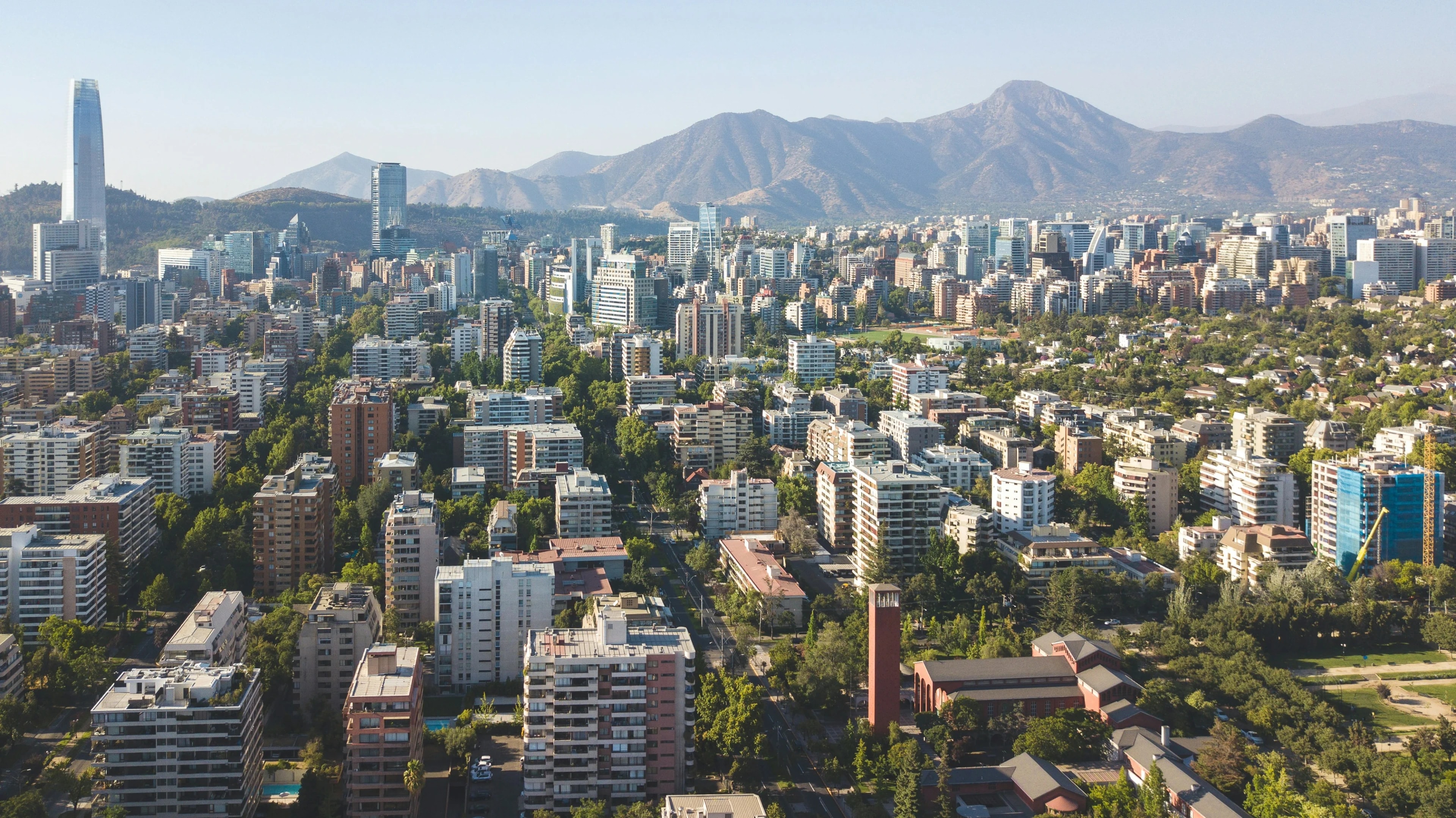
Photo by Francisco Kemeny
Metropolitana de Santiago
Home to nearly eight million people, the Santiago Metropolitan Region is Chile's bustling heart, a modern capital ringed by the snow-capped Andes. The city centre blends colonial plazas and neoclassical architecture with glass skyscrapers, while the Cajón del Maipo canyon and Andes ski resorts lie just an hour away.
Audio version available
Santiago, A Capital Between Mountains
Santiago sits in a broad valley at 520 metres above sea level, framed on the east by the snow-capped Andes and on the west by the lower Coastal Range, a setting that gives the city one of the most dramatic skylines of any world capital on clear winter days.
The historic centre, anchored by the Plaza de Armas and the neoclassical Palacio de La Moneda, preserves the grid layout traced by Pedro de Valdivia in 1541, while the modern financial district of Sanhattan (Santiago's Manhattan) rises in glassy towers along Avenida Apoquindo.
Between these poles, the city unfolds as a patchwork of distinct neighbourhoods: the cultural corridor of Barrio Lastarria with its independent cinemas and galleries, the vintage shops and brunch spots of Barrio Italia, the university buzz of Barrio República, and the sprawling Mercado Central where Santiaguinos have shopped for seafood under a Parisian iron-frame roof since 1872.
Parks, Hills, and Green Spaces
For a city of its size, Santiago is remarkably green. Cerro San Cristóbal, the 860-metre hill that forms the backbone of Parque Metropolitano, offers hiking trails, a funicular railway, Japanese gardens, and a hilltop statue of the Virgin Mary with panoramic views stretching from the Andes to the Pacific on clear days.
At its base, the Parque Bicentenario in Vitacura is a contemporary park with flamingo ponds, sculpture gardens, and cycling paths. In the city centre, Cerro Santa Lucía, the rocky promontory where Valdivia founded Santiago, has been transformed into a romantic hillside garden with fountains, terraces, and hidden viewpoints.
Further afield, the Parque Mahuida and Parque Aguas de Ramón on the city's eastern edge offer access to native forest with views of the first Andean peaks, giving Santiaguinos a taste of the mountains without leaving city limits.
Cajón del Maipo, The City's Andean Playground
Less than an hour southeast of Santiago, the Cajón del Maipo is a deep Andean canyon carved by the Maipo River that serves as the capital's outdoor playground. The canyon climbs from the vineyard-covered foothills through narrow gorges to the Embalse El Yeso, a reservoir at 2,500 metres whose turquoise waters reflect the surrounding peaks in postcard-perfect stillness.
Along the way, the small towns of San José de Maipo and San Alfonso offer white-water rafting on the Maipo's rapids, horseback riding through native forest, rock climbing on basalt cliffs, and natural hot springs at Baños Morales and Baños Colina, where steaming thermal pools cascade down a mountainside at over 3,000 metres.
The hanging glacier of El Morado, accessible via a moderate day hike, is one of the most impressive glacial sights within reach of any South American capital.
Maipo Valley Wines and Gastronomy
The Maipo Valley, which wraps around Santiago's southern and eastern flanks, is Chile's oldest and most prestigious wine region, the Bordeaux of South America. Its warm days, cool nights, and stony alluvial soils produce Cabernet Sauvignons of exceptional depth and complexity, with estates like Concha y Toro, Santa Rita, and Almaviva ranking among the world's most recognised wine brands.
The Alto Maipo sub-region, at higher altitudes near the Andean foothills, has emerged as the source of Chile's most concentrated and age-worthy reds. Santiago's restaurant scene has evolved to match its wines: the city now boasts multiple entries on Latin America's 50 Best Restaurants list, with chefs drawing on Chile's extraordinary diversity of ingredients, from Pacific seafood to Patagonian lamb to foraged Andean herbs, to create a cuisine that is uniquely Santiago.
Skiing the Andes, From City to Snow in 90 Minutes
Few world capitals can claim ski resorts within 90 minutes of the city centre, but Santiago has three: Valle Nevado, La Parva, and El Colorado, all clustered above 2,800 metres in the Andes directly above the eastern suburbs. Valle Nevado, designed by the same architects who built Les Arcs in France, offers the most extensive terrain with over 40 runs and access to backcountry skiing across 900 hectares of high-alpine terrain.
La Parva, popular with Santiago's professional class, has a charming village atmosphere and some of the steepest in-bounds runs in South America. El Colorado and its sister resort Farellones cater to beginners and families.
The season runs from June to September, and on powder days the access road fills with Santiaguinos heading up for a morning of skiing before returning to the city for dinner, a combination of urban sophistication and alpine adventure that few places on Earth can match.
Points of Interest
Cities
Cities
Alhué
A quiet colonial village in the far south-west corner of the Metropolitan Region, set in a valley of its own and reached by a single road. Its whitewashed church of San Jerónimo, built in the 18th century, is a national monument, and gold has been mined in these hills since colonial times. The name comes from Mapudungun and is usually read as 'place of spirits'.
Cities
Isla de Maipo
A town set between two arms of the Maipo river, which is how it got its name, and the heart of the valley's wine country: De Martino, Santa Ema and Tarapacá all have their cellars within a few kilometres. The March harvest festival fills the square with new wine and cueca. It is about an hour south-west of Santiago through orchards and vineyards.
Cities
Melipilla
The main town west of Santiago (around 120,000 people) and the capital of its province, a farming and dairy centre on the old road down to the coast at San Antonio. Its Plaza de Armas and 19th-century arcades still anchor a weekly market that draws the whole valley. The name is Mapudungun, generally read as 'four spirits'.
Cities
Pomaire
A village of potters, and for many Santiaguinos a Sunday outing. Workshops along the main street turn the local brown clay into the three-legged piglets that Chileans keep for luck, alongside jugs, pots and bowls still fired the traditional way. The restaurants are known for enormous empanadas, and it sits a few kilometres from Melipilla.
Shop · Restaurant · Parking
Cities
San José de Maipo
The capital of the Cajón del Maipo, at about 970 m where the Andes close in on the river. Founded in 1792 and built around a wooden church of the same year, now a national monument, it later became a mountain health resort for its dry air. Today it is the gateway to the canyon: Embalse El Yeso, Baños Morales and the El Morado glacier all lie further up the valley.
Hiking · Thermal baths · Camping
Cities
Santiago
Founded in 1541 by Pedro de Valdivia and home to around seven million people, close to half of Chile. The city sits in a basin with the Andes rising straight behind it, a backdrop that appears at the end of streets all over town and carries snow for much of the year. Its landmarks range from the Plaza de Armas and La Moneda to Cerro San Cristóbal and the Gran Torre Santiago, the tallest building in South America. The same basin traps winter smog, which is the city's long-standing problem.
Restaurant · Lodging · Shop · Viewpoint
Cities
Talagante
A provincial capital on the Mapocho river, long known for its clay figurines: brightly painted scenes of country life, saints and musicians that are a recognised craft tradition of the region. It sits among the vineyards and orchards south-west of Santiago, with Viña Undurraga just outside town.
Wineries
Wineries
Viña Concha y Toro
Founded in 1883 at Pirque, an hour from Santiago, and now the largest wine producer in Latin America. Its cellar gave rise to the Casillero del Diablo story, invented to keep thieves away from the best barrels, and the name became a label sold worldwide. Visitors tour the historic gardens and cellars, taste in the wine centre and eat at the Diablo restaurant.
Wine Tasting · Tours · Shop · Restaurant
Wineries
Viña Haras de Pirque
An organic estate at Pirque whose name means a horse stud, developed with the Antinori family of Tuscany. The vineyards sit against the Andes about 30 km south of Santiago, and the wines run from the Albis blend to Albaclara and Hussonet. There is a restaurant, a wine shop and tours of the cellars.
Wine Tasting · Tours · Shop
Wineries
Viña El Principal
A vineyard in the upper Maipo at Pirque, in the first folds of the Andes, named after Andetelmo, the Picunche chief known as El Principal who once held these lands. The estate concentrates on a single flagship red of the same name, alongside the Memorias, Calicanto and Kiñe labels. Tours and tastings run among the vines.
Wine Tasting · Tours
Wineries
Viña Alyan
A small family winery in Pirque run by Ale and Pablo, at the foot of the Andes. Its best-known visit is the Sunset Experience, timed for the light on the mountains, and a workshop where old barrels and salvaged material are turned into furniture and objects. Tastings are informal and the scale is deliberately modest.
Wine Tasting · Tours
Wineries
Viña Santa Rita
Founded in 1880 at Alto Jahuel, south of Santiago, and one of Chile's grand old estates: a park of century-old trees, a colonial-era manor house that is now the Casa Real hotel, and the Museo Andino with its collection of pre-Columbian pieces. Tradition says 120 patriot soldiers sheltered here after the battle of Rancagua, which is where the 120 label takes its name.
Wine Tasting · Tours · Restaurant · Lodging · Shop
Wineries
Viña Pérez Cruz
A red wine estate at Huelquén, in the Paine foothills, where everything is grown, made and bottled on the one property. The focus is Cabernet Sauvignon, Carmenere, Syrah and Cot, with the Pircas and Liguai lines among the best known. Visits range from a short tour to bike rides through the vineyards and a tasting with brunch.
Wine Tasting · Tours
Wineries
Viña De Martino
A family winery at Isla de Maipo known for reviving old ways of making wine: clay tinajas, forgotten parcels of old vines, and fruit from as far south as Itata. The cellar visits are built around those bottles, from single vineyard wines to vertical tastings of the Cellar Collection. Tastings run on weekday mornings and include the cellars.
Wine Tasting · Tours
Wineries
Viña Tarapacá
One of the older estates of the Maipo valley, at Isla de Maipo, where the vineyards surround a large park and the old winery buildings. Tours take in the soils and the vines before tastings of the Gran Reserva wines, often paired with a meal. The estate also runs private lunches and events.
Wine Tasting · Tours · Restaurant
Wineries
Viña Santa Ema
The Pavone family, of Italian descent, have made wine at Isla de Maipo for generations, drawing on vineyards strung between the Andes and the coast. Catalina and Rivalta are the top labels, with the Gran Reserva Cabernet the best known abroad. It is about 45 minutes from Santiago, with tours, tastings and the Casa Ema restaurant.
Wine Tasting · Tours · Shop
Wineries
Viña Undurraga
Founded in 1885 and among the oldest wineries in Chile, with 140 years of harvests behind it. The estate at Talagante is known for its historic gardens, and the range runs from everyday bottles to the Altazor flagship. Tours of the park and cellars end with tastings.
Wine Tasting · Tours · Shop
Wineries
Viña Monte María
A small family winery at El Monte, west of Santiago, making red wine from the commune's Cabernet Sauvignon and Carmenere. It has been going for over fifteen years and stays deliberately boutique, with a short range of reserve and gran reserva bottles. Visits are family-run tastings rather than a polished tourist circuit.
Wine Tasting · Tours
Wineries
Viña Odfjell
A Norwegian family's winery at Padre Hurtado, on the northern edge of the valley, farming certified organic vineyards here and in Maule and Lontué. Norwegian fjord horses work the rows and appear in the visits, which range from a half-hour tasting to a long morning of riding, walking the vines and touring the cellar.
Wine Tasting · Tours
Wineries
Viña Chocalán
A family estate in the coastal Maipo at Melipilla, 35 km from the Pacific, where the sea air slows ripening and keeps the reds fresh. The cellar is built into the hillside, and the range covers Carmenere, Cabernet Sauvignon, Syrah and Pinot Noir. The visitor centre runs tours and hosts events and weddings.
Wine Tasting · Tours
Natural Reserves
Natural Reserves
Santuario de la Naturaleza Altos de Cantillana
A range of hills south-west of Santiago rising to about 2,300 m, holding relict forests of roble de Santiago that survive here at the northern limit of their range. The massif is one of the richest pockets of plant and animal life in central Chile, with species found nowhere else. Much of it is in private hands, so access is limited and usually arranged in advance.
Hiking · Wildlife · Viewpoint
Natural Reserves
Humedal de Batuco
A wetland on the plain north of Santiago, and the most important one left in central Chile for birds: well over a hundred species have been recorded, from black-necked swans to flamingos passing through. Spreading suburbs and drainage have pushed it to the edge, and it is now protected as a nature sanctuary. The best viewing is early, from the paths along its margin.
Wildlife · Viewpoint
Natural Reserves
Centro de Esquí El Colorado
A ski area above Farellones, about 40 km from Santiago, spread over wide open slopes between roughly 2,400 and 3,300 m. It links with La Parva and Valle Nevado on one ticket, which together make the largest skiable area in the southern hemisphere. The season runs from June to September or October, depending on the snow.
Ski · Restaurant · Parking
Natural Reserves
Centro de Esquí La Parva
A ski resort of chalets and lifts above Farellones, running from about 2,750 m to 3,600 m, with long runs facing the Santiago basin. It connects with El Colorado and Valle Nevado, and is known for the quiet of its village compared with its neighbours. The views across the city to the coastal range are part of the attraction.
Ski · Restaurant · Parking
Natural Reserves
Centro de Esquí Lagunillas
The smallest and closest of the ski centres, in the Cajón del Maipo about 67 km from Santiago, run by the Club Andino since the 1930s. Short runs, old lifts, no resort village and a loyal following among Santiaguinos learning to ski. The season is shorter here, as the slopes sit lower than the Farellones resorts.
Ski · Parking
Natural Reserves
Centro de Esquí Valle Nevado
The largest ski area in Chile, opened in 1988 at between about 2,860 m and 3,670 m, with hotels, restaurants and lifts on the mountain itself. It is the base for heliskiing in the central Andes and connects with El Colorado and La Parva. The dry Andean snow and the long season are what bring skiers from abroad.
Ski · Lodging · Restaurant · Parking
Natural Reserves
Cascada de las Ánimas
A private reserve at San Alfonso in the Cajón del Maipo, run by the same family for generations and named after the waterfall at its heart. It offers rafting on the Maipo, horse riding, walking trails, cabins and a campsite, with hot tubs looking over the river. It is one of the most popular weekend escapes from Santiago.
Hiking · Camping · Thermal baths · Restaurant
Natural Reserves
Cerro El Plomo
At 5,424 m, the peak that dominates the view east from Santiago on a clear day. In 1954 the frozen body of an Inca child was found near its summit, one of the best preserved high-altitude burials ever recovered and now in the natural history museum in Santiago. The climb is long but non-technical, and a classic first high mountain for Chilean climbers.
Hiking · Viewpoint
Natural Reserves
Monumento Natural El Morado
A small protected area above Baños Morales in the upper Cajón del Maipo, taking in the San Francisco glacier and the 4,490 m peak of El Morado. The walk from the entrance to the lagoon below the glacier is a half-day on a clear path, climbing through a valley of coirón grass and rock. It is usually open from spring to autumn.
Hiking · Viewpoint · Camping
Natural Reserves
Embalse El Yeso
A reservoir at about 2,500 m up the Cajón del Maipo, holding back meltwater from the Andes and supplying a large part of Santiago's drinking water. The turquoise colour of the water against bare rock makes it one of the most photographed places near the capital. The road in is rough, and the weather turns quickly at this altitude.
Viewpoint · Parking
Natural Reserves
Parque Nacional Glaciares de Santiago
Chile's newest national park in the region, protecting the glaciers of the upper Maipo basin that feed the rivers Santiago drinks from. It covers a vast, high and largely roadless stretch of the Andes, with ice fields that have been retreating for decades. There are no visitor facilities; this is a protected watershed rather than a park to walk into.
Hiking · Wildlife · Viewpoint
Natural Reserves
Parque Nacional Río Clarillo
The closest national park to Santiago, in the hills above Pirque, protecting a valley of sclerophyll forest along a clear river. Long a national reserve, it was raised to national park status in 2021. Marked trails, picnic areas and pools in the river make it a busy day out in summer, and entry numbers are capped.
Hiking · Swimming · Picnic area · Parking
Natural Reserves
Reserva Nacional Roblería del Cobre de Loncha
A reserve in the hills near Alhué protecting the northernmost forests of roble, which grow here far from their usual range in the south and survive on coastal fog and winter rain. It is quiet, little visited and reached by dirt road. The surrounding hills have been mined for copper and gold since colonial times.
Hiking · Wildlife
Natural Reserves
Santuario de la Naturaleza Yerba Loca
A sanctuary of some 39,000 ha in the valley of the Yerba Loca stream, on the road up to Farellones. A good path follows the valley floor from Villa Paulina towards the glaciers at its head, climbing gently through pasture and scrub with the peaks ahead. It is the easiest taste of high mountain country within an hour of Santiago.
Hiking · Camping · Viewpoint