ExploreChileliving unforgettable adventures


Maule
The Maule Region is the soul of rural Chile, a patchwork of century-old vineyards, riverside farming towns, and Andean foothills that have shaped the country's wine and agricultural identity. Talca, the regional capital, is where Chile's declaration of independence was signed in 1818.
Audio version available
Talca and the Heart of Rural Chile
Talca occupies a unique place in Chilean identity: it was here, in 1818, that Bernardo O'Higgins signed the declaration of independence that formally severed Chile from Spanish rule. The city's O'Higgins Museum preserves the room where the document was signed, and the surrounding streets retain a pleasant provincial charm of leafy plazas, single-storey adobe houses, and a bustling Mercado Central where farmers sell the produce of the central valley, tomatoes, avocados, peaches, and the region's famous strawberries.
Though the 2010 earthquake devastated much of the historic centre, Talca has rebuilt with resilience, and its university ensures a youthful energy.
The surrounding countryside is quintessential Chile profundo, rolling fields of wheat and corn, eucalyptus-lined irrigation canals, and small towns where life still revolves around the harvest cycle, the rodeo season, and Sunday asados.
Old Vines and New Wine, Chile's Largest Wine Region
The Maule produces more wine than any other region in Chile, and its recent transformation from bulk-wine breadbasket to source of critically acclaimed bottles is one of the most exciting stories in the global wine world. The key players are the old-vine País and Carignan grapes, planted by Spanish missionaries centuries ago and largely ignored during Chile's rush to plant Cabernet and Chardonnay, which are now being vinified by a new generation of winemakers into distinctive, terroir-driven reds that have won over sommeliers and critics.
Estates like Gillmore, Bouchon, and MOVI (Movement of Independent Vintners) are leading the charge, crafting wines from dry-farmed bush vines that can be over 200 years old.
The Maule Valley, Cauquenes, and the emerging coastal zone around Empedrado each offer distinct expressions, and the region's wine route passes through some of Chile's most photogenic rural landscapes.
Radal Siete Tazas, Seven Turquoise Cups
Deep in the Andean foothills east of Molina, the Radal Siete Tazas National Park protects one of Chile's most iconic natural wonders: a sequence of seven rock pools, carved by the Claro River into dark volcanic basalt, connected by waterfalls that cascade from one turquoise cup to the next. The sight is mesmerising, the water's colour comes from dissolved minerals and the play of light through the narrow canyon, and a well-maintained trail allows visitors to view all seven pools from above.
Further upstream, the Salto de la Leona (Lion's Leap) waterfall plunges 15 metres into a deep gorge, and the park's native forest shelters coigüe and roble trees, toucans, woodpeckers, and the occasional puma.
The park is a popular summer day trip from Talca and Curicó, though those who stay overnight at the basic campgrounds are rewarded with starlit skies and the sound of rushing water.
Altos de Lircay and the Andean Backcountry
For serious hikers, the Altos de Lircay National Reserve offers some of the finest multi-day trekking in central Chile. The reserve's signature route climbs through dense native forest to the Enladrillado, a vast plateau of hexagonal basalt columns at 2,200 metres that resembles a natural brick floor and offers 360-degree views of volcanoes, glaciers, and the central valley far below.
Condors ride the thermals above the ridgelines, and the autumn colours, when the deciduous southern beech forests turn gold and crimson, rival those of New England. The Descabezado Grande volcano (3,830 m) dominates the eastern horizon, and experienced trekkers can extend their route into the backcountry to reach hot springs, alpine lakes, and the rarely visited volcanic crater.
The reserve is far less crowded than Torres del Paine, offering a wilderness experience that feels genuinely remote despite being just a few hours from Talca.
Coast, Wetlands, and Fishing Villages
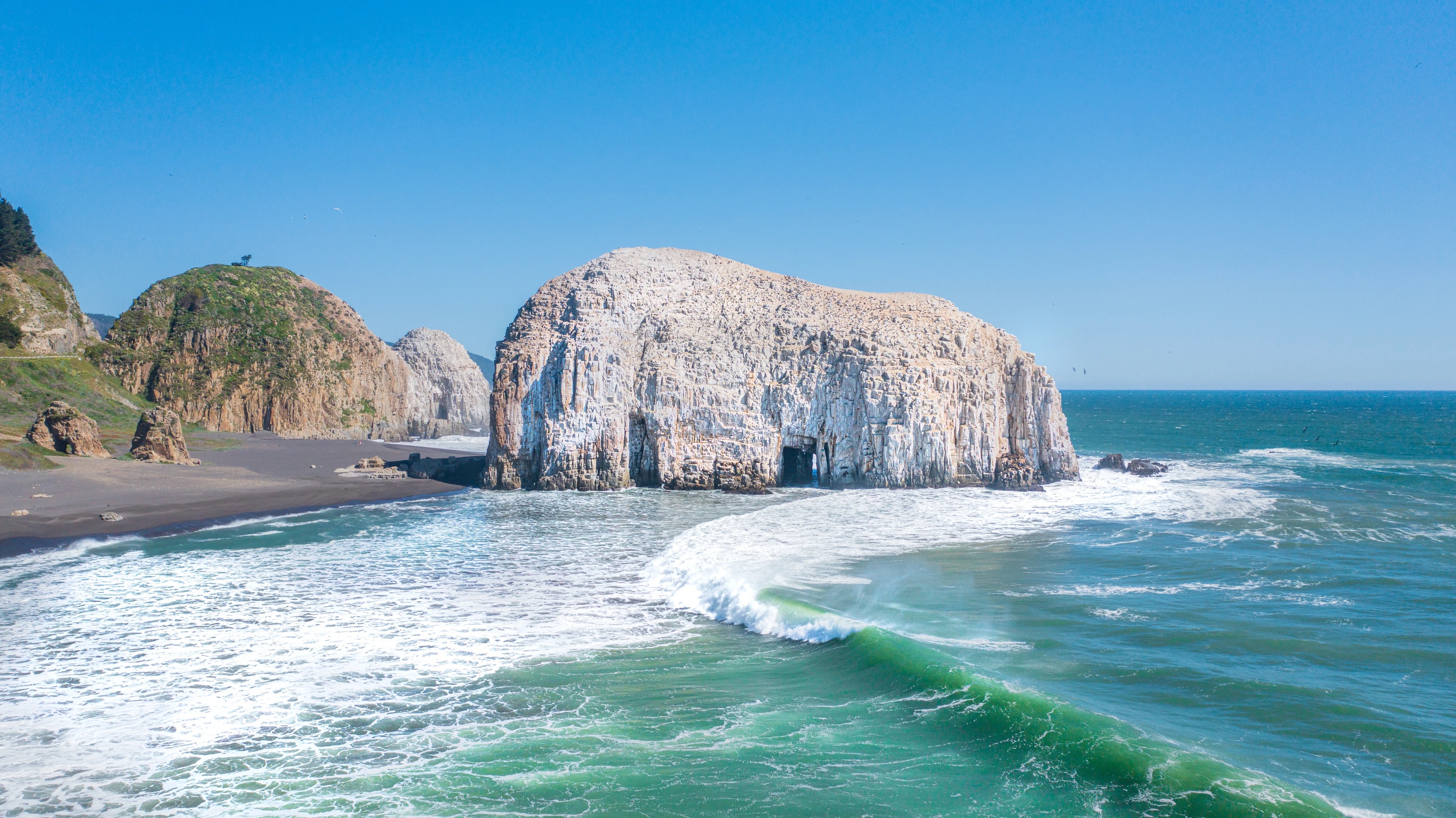
The Maule coast is a world apart from the valley's agricultural heartland. Constitución, the region's main coastal town, sits at the mouth of the Maule River amid dramatically sculpted rock formations, sea stacks, arches, and blowholes shaped by millennia of Pacific swells. The town was heavily damaged by the 2010 tsunami but has rebuilt, and its wild black-sand beaches attract a small but devoted surfing community.
South along the coast, the Reserva Nacional Federico Albert protects a coastal forest originally planted to halt advancing sand dunes, while the Laguna Torca wetland is a Ramsar site sheltering the world's largest breeding colony of black-necked swans alongside dozens of other waterbird species.
The fishing villages of Pelluhue and Curanipe offer fresh seafood, quiet beaches, and a pace of life that seems to belong to an earlier era, exactly the kind of place where you can sit on a pier, eat a empanada de jaiba, and watch the Pacific turn gold at sunset.
Points of Interest
Cities
Cities
Talca
Capital of the Maule Region (population around 220,000) and the heart of central Chile's wine country. Founded in 1692, the city played a starring role in the country's independence, Bernardo O'Higgins signed the declaration of Chilean independence here in 1818, and his colonial home still anchors the Plaza de Armas. The 19th-century saying 'Talca, París y Londres' captured its cosmopolitan pretensions. Rebuilt after the 2010 earthquake, Talca is the natural gateway to the Maule Valley wineries and a busy university city.
Cities
Curicó
City of around 155,000 in the Maule Region, capital of the Curicó wine valley. The wide Plaza de Armas is famed for its sixty Canary Island palm trees and a centuries-old Mapuche bronze, and the surrounding countryside is dotted with vineyards from Viña Miguel Torres, San Pedro and a long list of historic estates. The Fiesta de la Vendimia in March is one of the country's oldest grape-harvest celebrations.
Cities
Linares
Quiet agricultural city of around 95,000 in the Maule Region, surrounded by orchards and the foothills of the Andes. Linares is the gateway to the Reserva Nacional Altos de Lircay and the high volcanic Laguna del Maule, and is celebrated locally for its traditional sweets (colaciones) and as the birthplace of the great pianist Claudio Arrau.
Cities
Cauquenes
Historic town of around 40,000 on the southern edge of the Maule Region, founded in 1742 between the Maule and Itata valleys. Cauquenes is wine country, with old País and Carignan vines worked by small family bodegas, and is famous within Chile for its country sausages and the Fiesta de la Vendimia. The surrounding hills and rural settlements still feel like 19th-century rural Chile.
Cities
Constitución
Coastal city of around 50,000 at the mouth of the Maule River, where the cellulose pulp industry meets a working surf town. Constitución was devastated by the 2010 earthquake and tsunami and has since been rebuilt with notable urban-design help. The wide Maule estuary, the dramatic Piedras de Constitución sea stacks and a string of Pacific beaches make it one of the most photogenic spots on the Maule coast.
Volcanoes
Volcanoes
Volcano Tinguiririca
Active stratovolcano at 4,280m on the O'Higgins–Maule border. Known for fumaroles, hot springs, and glaciers. Part of the Planchón-Peteroa-Tinguiririca volcanic complex in the Andes.
Free
Hiking
Volcanoes
Volcano Quizapú
Volcano at 3,292m in the Maule Andes, famous for its 1932 eruption, one of the largest of the 20th century. Part of the Descabezado Grande–Quizapú complex. The crater and surrounding ash fields are a testament to its powerful history.
Free
Hiking
Wineries
Wineries
Viña Fernandez López
Viña Fernández López was founded in 2001 by the Fernández López family in Numpay, on the outskirts of Talca, in the Maule region. After more than two decades of work, it has become a steady mid-sized presence in Chilean wine, small enough to keep its family roots intact, established enough to supply wines and sparklings to major supermarket chains across the country. The estate sits in the heart of central-south Chile, on the alluvial plain of the Maule. Warm dry summers, cool nights from the Andes, and the deep soils typical of the valley give the wines balance and approachability without sacrificing freshness. The philosophy is openly anti-industrial: artisanal vinification methods on a family scale, with a clear preference for elegant, well-made wines over volume. The portfolio covers Sauvignon Blanc, Cabernet Sauvignon, Carménère, Chardonnay, and Pinot Noir, plus sparklings, anchored by labels like Luz de Luna Cabernet Sauvignon and Luz de Luna Sauvignon Blanc. The family stays close to the work: vineyards and bottling facilities sit on the same site in Numpay, Talca, and visits are best arranged directly with the team.
Mon–Fri 10:00–18:00
Shop
Wineries
Viña Casa Donoso
Casa Donoso has had three lives. It was first founded around 1960 by Lucía Donoso, then acquired by a group of French wine enthusiasts in 1989 who saw in the Maule Valley a terroir with the potential of Bordeaux. In 2010 a Chilean group took over, building the multi-brand Donoso Group around the original estate. The winery now spans four vineyards across 550 hectares of the Maule, stretching from the pre-cordillera all the way to the coast. The valley's wide diurnal swing, temperatures climbing from 10 °C at dawn to 32 °C in the afternoon during ripening, keeps acidity and aromatic depth in balance, while soils shift from alluvial clay to granite as you move east. Among the rows are vines that have been quietly producing for over 80 years. The winemaking philosophy is built around 'respect for the grape': measured oak influence, gentle micro-oxygenation, and an obsession with preserving fruit intensity through to the bottle. The cellar releases reds, whites, and sparkling wines under seven labels including Casa Donoso, Las Casas de Vaquería, Sucesor, and Pocoa. Visitors are welcomed for wine tourism experiences in and around the historic estate, and the Club Donoso Group hosts exclusive events for members.
Mon–Fri 10:00–18:00
Wine Tasting · Tours · Restaurant
Wineries
Viña Terranoble
TerraNoble was born in 1993 from the conviction of Jorge Elgueta, a winemaker convinced that the deep, mineral-rich soils of the Maule Valley deserved their own boutique label. The name itself honours that idea: 'the majesty of the noble soils' that lie beneath the family estate in San Clemente, on the eastern edge of Talca. In 1994, when Chilean Merlot was officially reclassified as Carménère, a grape long believed extinct, TerraNoble made the bold call to specialise. Today the estate is one of the country's defining houses for the variety. Vineyards span three valleys with very different climates: the original Maule (warm days, cool nights, granitic and clay soils), Colchagua (Mediterranean warmth and structured reds), and the cool-climate Casablanca close to the Pacific (whites and Pinot Noir). The philosophy is summed up in a single line: 'authentic wines that reflect our pioneering spirit and the nobility of our land.' That translates into excellence, transparency, and a deep respect for the ecosystem, recognised with the 2019 Sustainable Wine of Chile certification, V-Label vegan certification in 2020, and the 2016 International Wine & Spirits Competition title of 'Chilean Wine Producer of the Year.' The portfolio runs from premium lines (Civis, Azara, Algarrobo) to the experimental CA1 Andes / CA2 Costa Carménère project that contrasts mountain and coastal expressions of the same grape, plus Lahuen and Raíces del Maule.
Mon–Fri 10:00–18:00
Wine Tasting · Tours · Shop
Wineries
Viña Casa Mesa Bozzolo
Casa Mesa Bozzolo traces its winemaking story all the way back to 1850, the kind of timeline that puts the family among the oldest continuously running cellars in the Maule Valley. The Italian-rooted Bozzolo line married into the local Mesa family, and today the operation is led by founder Tomás Mesa Latorre alongside agronomist Fabián Mesa Latorre and winemaker Ana María Flores. The philosophy is summed up in the house motto, 'cosechado en casa, embotellado en casa' (harvested at home, bottled at home). Every step of the process happens on the estate, with nothing outsourced; the team works the same vineyards their predecessors did, using regenerative agriculture and natural land-management practices, recycling grape pomace and byproducts back into the soil. The wines are 100% Valle del Maule, sun-ripe, structured, and grown in a region long associated with old vines, dry-farming, and a deep, traditional relationship with the land. Production stays small and artisanal, the kind of cellar where each bottle still carries the fingerprints of the people who farmed and made it. Visitors can experience the estate through a full enotourism programme, vineyard tours, tastings, the seasonal Vendimia (harvest) program, an on-site wine shop, lodging, and a wine club with member discounts of up to 80%.
By appointment
Wine Tasting · Tours · Shop · Restaurant · Lodging
Wineries
Viña Balduzzi
When Albano Balduzzi crossed the Atlantic from Italy in 1906, he carried with him three centuries of family winemaking tradition, and the conviction that the Maule Valley's deep soils and luminous summers would yield wines as good as any in the Old World. Four generations later, his great-grandchildren still tend the same San Javier estate, where the philosophy has barely changed: 'the secret is in the grape.' Reds come from the Aitué vineyard, where granitic soils and warm, dry days build the structure of the Cabernets and Carménères; whites are sourced from cooler Andean parcels with sandy-loam soils that lend a bright, crisp edge. Master winemaker Juan Canales has guided the cellar for over two decades, treating each vintage as a small act of craftsmanship and pursuing a gentle, sustainable approach that minimizes the winery's footprint on the land it depends on. The estate welcomes visitors year-round for guided tours through the historic cellars and surrounding vineyards, with tastings paired to the family's stories and a chance to meet the people behind the labels.
Mon–Fri 10:00–18:00
Wine Tasting · Tours · Restaurant · Shop
Wineries
Viñedos Puertas
Viñedos Puertas was founded in 1950 by José Puertas Pons, a Spanish immigrant from Campo, in Huesca, who carried his family's winemaking sensibility across the Atlantic and put it to work in the Curicó Valley. More than 70 years on, the operation is still firmly a family business. The original estate sits in Convento Viejo, in the heart of the Curicó Valley, with 80 hectares of vineyards fed by water from the Andes. The valley combines warm dry summers, cool nights pulled down from the cordillera, and fertile alluvial soils, a classic central-Chile recipe for wines with both depth and freshness. The philosophy is built around quality at every step: terroir-driven plot selection, matching the right clones to each soil profile, year-round vineyard care, harvest timing tuned to ripeness, and modern winemaking technology in the cellar. Sustainability and ethical work, with the team, with partners, and with the environment, sit alongside the technical pursuit of quality. The portfolio runs from Varietal and Reserva through Gran Reserva, Premium blends, Sparkling, and the top-tier Icono line, complemented by a bulk-wine service. Visitors can arrange tastings and tours of the cellar and vineyards directly with the family team.
Mon–Fri 10:00–18:00
Shop
Wineries
Viña Korta Wines
Korta is a family business of Basque origin, founded in 1997 by Francisco Korta and his wife Bucarey on the historic Santa Ana de Peteroa estate in Sagrada Familia, in the Curicó Valley. The wine project grew naturally out of the family's earlier venture, Frutas de Curicó, established in 1989, when they decided to turn their relationship with the land towards Chilean wine for the world. The vineyards spread across two contrasting terroirs in the Curicó Valley. In the Zapallar pre-Andean foothills, 30 hectares of cool-climate whites enjoy nights pulled down from the cordillera. The mountainous Curicó terroir holds Sauvignon Blanc planted in three different clones, alongside Chardonnay, Sauvignon Gris, Riesling, Roussanne, and Marsanne, an unusually wide aromatic-white palette for the region. The valley-floor reds come from generous plantings of Cabernet Sauvignon (about 120 acres), Carmenère (60), Syrah (40), Petit Verdot (40), Merlot (30), and Cabernet Franc (20). The philosophy stays close to the land: a family operation focused on translating Curicó's distinct microclimates into wines that are honest to their place and easy to drink, with the elegance the cooler hillside parcels provide. Visitors can arrange enotourism experiences directly with the family at the Santa Ana de Peteroa estate, vineyard walks across both terroirs, cellar tours, and tastings across the red and white ranges.
Mon–Fri 10:00–18:00
Wine Tasting · Tours · Shop
Wineries
Viña Miguel Torres
When the Torres family planted its first vines in the Curicó Valley in 1979, it was a quiet revolution. The Spanish house, already five generations into its winemaking story in Catalonia, was the first European producer to establish itself in Chile, and it brought with it a toolkit that would change the country's modern wine industry: stainless-steel tanks, French oak barrels, and an obsession with the cool-climate side of warm valleys. Miguel Torres Maczassek, the fifth generation, has led the Chilean operation since 2010. The estate sits on the alluvial soils of the Curicó Valley, where Pacific breezes pull through the coastal range to temper hot summer afternoons, the same climatic gift the Torres family had been searching for when they first crossed the Atlantic. Vineyards now stretch from these central plains into cooler coastal and Andean parcels, supplying the grapes for a portfolio that ranges from accessible everyday bottles to the cellar's most celebrated single-vineyard wines. The winemaking philosophy stands on three pillars, fair trade, organic agriculture, and innovation, and one of its most distinctive projects is the rescue of forgotten Chilean varieties. Working with smallholder farmers across the Itata, Maule, and Bío Bío valleys, the team revives century-old País, Carignán, and Moscatel vines and turns them into bottlings like Cordillera Carignán, Estelado Rosé (Chile's first sparkling Rosé made from País), Reserva de Pueblo, and Días de Verano. The estate welcomes visitors year-round with guided tours through cellars and vineyards, tastings, and an on-site restaurant pairing the wines with seasonal Chilean cuisine.
Mon–Fri 10:00–18:00
Wine Tasting · Tours · Restaurant · Shop
Wineries
Viña Correa Albano
Correa Albano traces its winemaking story back to 1865, when José Gregorio Correa Albano began making wine in the Curicó Valley and, remarkably for a Chilean producer at that time, became the first to export Chilean wine in bulk to France, sending barrels mostly to Bordeaux and Burgundy. The modern winery was founded in 1991 by his direct descendant Sebastian Astaburuaga Correa, who built today's operation around five generations of family knowledge. The estate sits in Santa Rosa, Sagrada Familia, in the heart of the Curicó Valley, long called 'the Heart of the Chilean wine industry'. Tucked between the Andes and the Pacific, the valley enjoys a Mediterranean climate of warm dry summers, cool nights, and the kind of slow ripening that gives the grapes both depth and freshness. The original family vineyard was planted with noble varieties brought from Burgundy and Bordeaux a century and a half ago. The operation is built across three working facilities. San Ignacio is the original cellar, now used mostly for storage in epoxy-coated concrete tanks (1.1 million litres). Itahue is a smaller, dedicated facility for special wines in stainless steel (1 million litres). Santa Rosa, the main production site, handles about 80% of total output across stainless and concrete tanks (8.9 million litres combined). All in, the cellar capacity reaches roughly 10.9 million litres. The family enterprise runs both a family-wine division and a bulk-wine division, and visits to Santa Rosa can be arranged directly with the team to walk the cellars and taste through the range.
Mon–Fri 10:00–18:00
Shop
Wineries
Viña Valdivieso
When Alberto Valdivieso opened his cellar in 1879, he did something no one else in Chile, or in all of South America, had done before: he made sparkling wine using the traditional Champagne method. More than 140 years later, that pioneering act still anchors the house's identity, and Valdivieso remains the country's leading sparkling-wine specialist with the most varied portfolio in Chile. The operation is split between the historic headquarters in Macúl, on the southern edge of Santiago, and the working winery in Lontué, in the Curicó Valley. Curicó's wide diurnal swings, alluvial-granitic soils, and Pacific-cooled afternoons give the still wines their backbone, while careful sourcing across single vineyards and single valleys lets the team express each parcel's character. The portfolio runs from sparkling wines made by both the traditional Méthode Champenoise and the Charmat tank method, to single-vineyard varietals, Cabernet Sauvignon, Carménère, Merlot, Sauvignon Blanc, and the Winemaker's Reserve range. The crown jewel is Caballo Loco, the cellar's flagship 'crazy horse' multi-vintage red blend whose composition shifts subtly with each release, drawing from the cellar's most exceptional barrels regardless of year. Valdivieso welcomes visitors at the Macúl winery for guided tours of the historic cellars and tastings across the sparkling and still ranges.
Mon–Fri 10:00–18:00
Shop
Wineries
Viña San Pedro
Viña San Pedro was founded in 1865 by the brothers José Gregorio and Bonifacio Correa Albano on a small four-hectare estate in Molina, in the Curicó Valley. Descendants of a Spanish family settled in the region, they were among Chile's first viticultural pioneers, bringing European varieties across the Atlantic at a time when the country was still consolidating its independence, road infrastructure was scarce, and wine knowledge had to be built from scratch. More than 160 years later, the original estate has grown into one of Latin America's largest single vineyard sites, 1,200 hectares spread around the historic main cellar in Molina, 200 km south of Santiago. Beneath the working winery, the original century-old underground cava still ages the cellar's most ambitious wines. The valley's combination of warm days, cool nights pulled down from the Andes, and alluvial-granitic soils produces wines with the bright acidity, depth of flavour, and ageing potential that define the house style. The portfolio is anchored by the 1865 line, named after the founding year, and the Castillo de Molina reserves, both exported to over 80 countries. In the 1990s the estate set out to craft an icon that could stand alongside the world's best, and Cabo de Hornos was born: a single-vineyard expression of the Molina terroir, drawing on more than half a century of vine heritage and now considered one of Chile's most distinctive bottlings. The modern visitor centre at the Molina estate offers guided tours of the vineyards and underground cava, tastings across the full portfolio, and a restaurant pairing the wines with regional cuisine.
Mon–Fri 10:00–18:00
Wine Tasting · Tours · Restaurant · Shop
Wineries
Viña Echeverría
The Echeverría family's roots in Chilean farming reach back to the 1750s, when their Basque ancestors emigrated from Amezqueta in northern Spain and settled on agricultural land outside Santiago. The story of the winery itself begins later, in 1930, when Roger Piffre de Vauban, a French engineer from Montpellier and the maternal grandfather of today's Roberto Echeverría, travelled to the Curicó Valley with pre-phylloxera French rootstock and planted ungrafted vines on a parcel called La Estancia, in the small town of Molina. Roberto Echeverría Rubio formally founded the modern winery in the early 1950s, building on that vineyard's legacy. Molina sits some 200 kilometres south of Santiago in Chile's Central Valley, where a Mediterranean climate of long dry summers and wide diurnal swings, cool nights pulled down from the Andes, gives the wines balanced acidity and ripe fruit. The vineyards are planted on well-drained loamy soils, and the proximity to the cordillera keeps freshness in the bottle. The house style favours wines that express each variety with little or no oak, fresh, lively, fruit-driven. The Echeverría Reserva range includes seven such wines, with Sauvignon Blanc, Chardonnay, Viognier, and Cabernet Sauvignon at its core. Alongside the conventional cellar, the 'No es Pituko' line is made naturally from 37-year-old sustainably-farmed vines in the same valley, an honest, low-intervention counterpoint to the main range. Visitors to the Molina estate can arrange tours of the original La Estancia vineyards and tastings across the family's lineup.
Mon–Fri 10:00–18:00
Wine Tasting · Tours · Shop
Wineries
Viña Aresti
Aresti Chile Wine was founded in 1951 and has remained family-run for more than seven decades, today it stands as one of Chile's most respected family-owned wineries, with the next generation already shaping the future of the house. The operation spans four estates across Chile's Central Valley, covering 1,150 total hectares with 350 currently under vine. The vineyards are spread across distinct sub-zones of the Curicó area to take advantage of varied terroirs, alluvial valley floors, hillside parcels, and cooler coastal-influenced sites, giving the winemaking team a broad palette to draw from. The philosophy is built around sustainability across the whole value chain, environmentally friendly, socially equitable, economically viable. The cellar releases wines under the Trisquel premium line and several other labels exported to more than 40 countries, and operations are certified to international standards including BRCGS and Amfori BSCI for social and ethical compliance. Visitors can arrange tours and tastings at the estate to walk the vineyards and meet the family team behind the wines.
Mon–Fri 10:00–18:00
Shop
Wineries
Viña Invina
InVina was founded in 2007 by the Huber family, who first arrived in Chile in 1999 and spent the better part of a decade tending vineyards before launching their own label. Today it is a 100% family-owned operation with more than two decades of viticultural experience anchoring everything the cellar releases. The estate is firmly rooted in the Maule Valley, with five distinct vineyards spread across the region, each with its own climate, soils, and topography. That spread lets the team chase what they call 'the diversity of the Maule Valley': a single house style threaded through very different terroirs, from cooler hillside parcels to warmer alluvial blocks. The dedicated winemaking facility was built in 2013 to bring all those grapes under one roof. The philosophy is quality-first and selective: only the best portions of each harvest go into the bottled wines. Modern planting and management coexist with the careful preservation of older vineyards, and the operation is sustainability-certified through Sustentavid. The portfolio covers both reds and whites, and visitors are welcomed for enotourism experiences at the estate, best arranged directly with the family team.
Mon–Fri 10:00–18:00
Shop · Wine Tasting · Tours
Wineries
Viña Cremaschi Furlotti
Cremaschi Furlotti is the work of an Italian winemaking family whose American chapter began in 1889, when Angel Furlotti, great-grandfather of today's family, first crossed the Atlantic. Generations later, his heirs are still tending vines, now in Chile's Maule Valley, and the cellar still carries the Italian vinicultural sensibility that the founders brought with them. The estate spans some 400 hectares (about 1,000 acres) of vineyards of varied age, including low-yield, dry-farmed parcels that are more than 80 years old. Maule's warm dry summers, granitic and alluvial soils, and cool nights from the Andes give the wines body and depth, while the older blocks deliver the concentration and complexity that anchor the top tier. The philosophy is one of minimal intervention with a strong sustainability bent: selective pruning, spring shoot thinning, and manual leaf removal to balance sun exposure on the fruit; biodegradable and ecological inputs in the cellar; and a steady commitment to preserving the natural surroundings the vines depend on. The portfolio is led by reds, Cabernet Sauvignon, Carmenère, Merlot, Pinot Noir, Syrah, Malbec, Cabernet Franc, Petit Verdot, Nebbiolo, Cariñena, alongside Sauvignon Blanc, Chardonnay, and Pinot Gris on the white side. Visitors can connect directly with the family team to arrange tastings and tours of the historic estate.
Mon–Fri 10:00–18:00
Shop
Wineries
Viña Las Veletas
Las Veletas grew out of a friendship, owner Raúl Dell'Oro and the renowned enologist Rafael Tirado built the modern wine project together as 'algo muy familiar, de amistad' ('something familial, born of friendship'). The traditional estate they inherited sits in the dry-farmed lands of San Javier, on the southwestern fringe of the Maule Valley, in the small locality of Alquihue. This corner of the Maule has grown País, Carignan, and field-blend reds for generations. The vines lean on rainfall alone, and the granitic soils, hot dry summers, and cool coastal-influenced nights produce concentrated, terroir-honest fruit. The winemaking philosophy is one of 'maximum freedom to make mistakes and experiment', quality over quantity, wines made to share with friends rather than to fill commercial channels. The cellar focuses on rescuing old vines and on traditional varieties: País, Carignan, Cabernet Franc, Carménère, and Petit Verdot, with Gran Reserva bottlings sitting at the top of the lineup. Visits to the small Alquihue estate are best arranged directly with the team, an intimate, friendship-driven setup that mirrors the way the wines themselves are made.
Mon–Fri 10:00–18:00
Shop
Wineries
Viña El Aromo
Founded in 1922 by the French company Estansan & Co., drawn to the Maule Valley by its soils, climate, and potential for vinifera, Viña Aromo passed in 1940 into the hands of Don Víctor Henríquez Solar, who merged it with the family's existing vineyards. His sons Arturo and Manuel led the modernization push of the 1990s, and today the third generation of Henríquez runs what has grown into one of Chile's most awarded producers, headquartered at 17 Oriente 931 in Talca. The estate works 290 hectares across four sites, El Trapiche in Villa Alegre, Ventolera in Melozal, Santa Margarita and El Pilar in Maule, letting each parcel express its own slice of valley terroir, from cordillera breezes to Pacific influence. The Trapiche cellar holds 15 million liters; annual production runs to roughly 12 million liters for the domestic market and 3 million for export to over 30 countries. Under chief winemaker Jimena Egaña, the portfolio spans Super Premium, Premium, Gran Reserva, Reserva Privada (Cabernet Sauvignon, Carménère, Chardonnay), Varietal, sparkling, and late-harvest tiers. The house was named Chile's best winery at the 2021 Catad'Or World Wine Awards and operates under HACCP and BRC certifications. Visits Monday–Friday, 9:00–17:00.
Mon–Fri 10:00–18:00
Shop
Wineries
Viña Saavedra
Saavedra was founded in 1878 by Don José León Saavedra in Melozal, on the banks of the Loncomilla River in the heart of the Maule Valley. More than 145 years and several generations later, the cellar is still owned and run by the same family, the original land, the original village, the same long view of the river. From 1980 onwards, the next wave of the Saavedra family began modernising the vineyards and winemaking, planting new parcels alongside the older blocks and bringing contemporary viticulture and enology into the cellar. The estate sits in San Javier's Loncomilla microclimate, warm dry summers, cool nights pulled in from the coastal range, alluvial valley soils, conditions that favour balanced reds and aromatic whites. The philosophy combines old traditions with new aspirations: vineyards farmed with care across both heritage and modern blocks, and a cellar that pairs traditional craft with current technology. First exports left the bodega in 2001, and the wines now reach Europe, Asia, and the Americas. Visitors are welcomed for vineyard tours and tastings on the estate, with an on-site shop and a Wine Club membership for those who want to keep up with each release.
By appointment
Wine Tasting · Tours · Shop
Wineries
Viña Lacre Rojo
Lacre Rojo grew out of two families with more than a century of winemaking between them. Teodoro Villalobos and Carlos Muñoz built the project together as a continuation of that heritage, 'a legacy that evolves', and the winery still leans on the traditions handed down through their families. The name itself, 'red sealing wax', is a small love letter to old-world winemaking, the kind of detail that signed and sealed bottles long before barcodes, and it sets the tone for the cellar's attitude toward the craft. The estate sits in a Maule valley long recognised for its vineyards, where dry-farmed, old-vine plots are the norm and the rhythm of the seasons does most of the talking. The philosophy is artisanal and patient: 'authentic, memorable wines' that follow the land's cycles, made for sharing at the family table rather than chasing volume. Cultivation is slow and consistent, rooted in seasonal understanding and the heritage methods both families know by heart. Visitors can arrange vineyard tours and tastings on the estate, and the winery also sells wine direct in 12-bottle cases.
Mon–Fri 10:00–18:00
Wine Tasting · Tours · Shop
Wineries
Viña Perucich
More than a century ago, the Perucich family began a long journey from distant Croatia, paused in Italy, and finally laid down roots in Villa Alegre, a Maule Valley village that has shaped their winemaking ever since. What arrived with them was a deep, inherited love of the vine; what grew here was a technique born of that legacy fused with the soils, climate, and traditions of central Chile. The house holds tightly to the traditional production methods of the Valle del Maule, enriched by centuries of European craft passed down through the family. The result is wine made with patient, careful processes, quietly respectful of the land, expressive of the region's old varieties, and shaped by time more than by haste. Every bottle is intended as a pure expression of the Maule: authentic, distinctive, and carrying characteristics that only tradition can grant. Visits are by appointment.
By appointment
Shop
Wineries
Viña de Aguirre
Viña de Aguirre's roots go back to 1955, when French agronomist Pedro Etcheberry planted his first vineyard in Chimbarongo, Colchagua. In 1973 his son Pedro Félix de Aguirre and Ana María Etcheberry acquired Fundo Santa Ana de Liucura in Villa Alegre, anchoring the family in the Maule Valley, where the operation still stands today, run by seven members of the current generation. From the warm Mediterranean climate and wide diurnal swings of Villa Alegre, the estate works 520 hectares of owned vineyards plus another 640 under contract, producing roughly 22 million bottles a year for more than 45 markets. The portfolio runs from varietal and Reserva tiers up to the Premium 'Pater Familiae' line, created in 2016 to honor the founder, and spans Cabernet Sauvignon, Carménère, Merlot, Syrah, Pinot Noir, Chardonnay, Sauvignon Blanc, Viognier, late-harvest dessert wines, and rosés. The house has earned more than 130 gold medals and consistent recognition from Descorchados, James Suckling, the Berliner Wine Trophy, and Gilbert & Gaillard, with sustainability anchored by GLOBAL GAP, IFS, BRC, SEDEX, and Wines of Chile certifications. Visits run Monday through Friday, 10:00–17:00.
Mon–Fri 10:00–18:00
Shop
Wineries
Viña Doña Aurora
Viña Doña Aurora is a small, traditional cellar tucked into Cauquenes, in the southern Maule Valley. The estate operates under the name Cooperativa Covisanto and has been making wine for more than two decades, long enough to have built a steady local reputation, small enough to keep the family character intact. Cauquenes sits in one of Chile's most historic wine zones: a dry-farmed corner of the Maule where vineyards have been worked for generations on red clay and granitic soils, with warm dry summers tempered by cool Pacific-influenced nights. The wines that come off this land tend to be honest, sun-ripe, and unmistakably Maule. The portfolio leans into reserva and varietal bottlings made from carefully selected fruit, both fine modern grapes and the traditional varieties of the region. Recognised labels include the Starckhaus Gran Reserva (Syrah) and the Cerro Name Reserva (Cabernet Sauvignon), with Carménère, Merlot, and other Bordeaux varieties rounding out the lineup. The winery welcomes visitors at its shop and tasting room in Cauquenes; visits are best arranged directly with the team via phone or WhatsApp.
Mon–Fri 10:00–18:00
Wine Tasting · Tours · Shop
Wineries
Viña Don Heraldo
Don Heraldo is rooted in Cauquenes, in the Region del Maule, about 390 km south of Santiago and just 25 km from the Pacific. The estate is built on patrimonial dry-farmed plots more than 200 years old, surrounded by native forest, with the granite, clay, and quartz soils that define the secano interior of southern Maule. The wines are 'vinos de secano' in the truest sense: rain-fed, low-yield, expressive of place. Heritage varieties, Carignan and País, sit at the heart of the cellar, alongside Cabernet Sauvignon (across multiple tiers), Carmenère, Chardonnay, rosé, sparkling, and a small brandy line. Winemaker Felipe Zúñiga leads the cellar with a focus on identity, freshness, and sense of origin. The philosophy is sustainability-first: APL-certified environmental practices, careful energy and water use, and quiet respect for the surrounding native ecosystem. Don Heraldo has built one of the most complete wine-tourism experiences in southern Maule, a Best Wine Tourism Experience finalist (2023–2025), Sernatur-certified, and a 9.4/10 favourite on Booking.com. Visitors get sommelier-led vineyard and cellar tours with tastings, dinners at the on-site restaurant 'El Molino', and pet-friendly lodge stays with breakfast included. A wellness corner adds a medicinal-steam temazcal, hot tubs, and outdoor massages.
Mon–Fri 10:00–18:00
Wine Tasting · Tours · Shop · Restaurant · Lodging
Wineries
Viña Bouchon
The Bouchon story begins in 1887, when the French entrepreneur Émile Bouchon arrived in Chile as an enological advisor and put down roots in the Colchagua Valley. Four generations later, the family is still making wine, and the cellar still preserves the original 19th-century adobe walls and cement fermentation tanks where Émile's first vintages were raised. The heart of today's operation is the Mingre estate in the Maule Valley, acquired in 1977, a 19th-century property of dry-farmed old vineyards planted on the granite soils of the secano interior, the rainfed inland zone where País and Carignán have grown for centuries. Hot dry summers and cool nights pulled by the coastal range produce wines of structure, brightness, and a distinctly Maule soul. The philosophy mixes the heritage of those old vines with modern sustainable winemaking. Signature labels include the Mingre Bordeaux-style blend, the País Salvaje and other País expressions from ungrafted bush vines, the 'Las Mercedes' personal project (2015), and the Longaví joint venture with South Africa's Nieuwoudt family (2012). In 2024 Bouchon joined the Undurraga Wine Group, expanding reach without changing the family-led winemaking approach. Visitors to Mingre can stay at the estate's boutique hotel, eat at the on-site restaurant overlooking the vineyards, and tour the historic adobe cellar.
Mon–Fri 10:00–18:00
Shop
Wineries
Viña González Bastías
González Bastías is a family winery whose tradition stretches back more than two centuries. Today it is run by José Luis González, the fifth generation, together with his wife Daniela, on the south bank of the Río Maule, deep in the coastal range about 40 km from the Pacific. The land is dry-farmed: no irrigation, no chemical inputs, no shortcuts. Eighty percent of the grapes come from the estate's own vines, including País bushes that are well over 200 years old, with the remaining twenty percent from neighbouring ancestral plots farmed the same way. Soils, sunlight, and the slow, dependable rhythm of the seasons do most of the work. The philosophy is artisanal and minimal-intervention to the bone: native-yeast fermentations in adobe cellars, traditional coligue sieves, cement vats, and old Raulí-wood casks. The wines are neither pressed nor filtered, preserving what the team calls their 'elegant and rustic character.' The portfolio leans into heritage Maule varieties, País, Torontel, Moscatel, Semillón, Cabernet Franc, and a Chardonnay-Viognier blend, alongside an 'Asoleado,' a concentrated sweet wine made from sun-dried grapes. The estate welcomes visitors for tastings and tours of the cellar and vineyards, where ancestral equipment and centuries-old vines tell the story alongside the wines themselves.
By appointment
Shop
Wineries
Viña Millaman
Millaman, 'gold of the earth' in Mapudungun, was founded in 1946 by José Canepa at the historic Hacienda El Cóndor de Peteroa, in the Curicó Valley. The estate has been part of Chile's wine landscape for nearly 80 years, and the cellar still occupies the same restored colonial buildings the family chose at the start. The vineyards lie in the heart of the Curicó Valley near Sagrada Familia and Peteroa, where alluvial soils, warm dry summers, and the cool nights that drift down from the Andes give wines balanced acidity and ripe fruit. The winery's identity is anchored in a local legend, the Cóndor Dorado, a rare golden-copper-feathered condor said to soar over Sagrada Familia, revealing a 'secret richness' of infinite, sweet fruit beneath its wings. The philosophy is simple: tradition and technology, side by side. Modern winemaking equipment lives inside the original adobe walls, and the team blends classic Chilean practice with contemporary techniques to produce reds, whites, and rosés that range from accessible everyday bottles to estate-grown reserves. Visitors are welcomed at the Sala de Ventas (sales room) in Peteroa for tastings and direct purchases, and the historic estate itself offers a chance to walk the same grounds where the Canepa family began their Chilean story.
Mon–Fri 10:00–18:00
Shop
Wineries
Viña Requingua
Requingua, 'Corner of the Winds' in Mapudungun, was founded in October 1961 by Santiago Achurra Larraín on a modest 50-hectare estate in Sagrada Familia, in the heart of the Curicó Valley. More than six decades on, it has grown into one of Chile's most successful family wineries: 1,055 hectares of estate vineyards spread across three valleys, the operation now led by his son Santiago Achurra Hernández, with the third generation already stepping in. The vineyards span Colchagua, Curicó, and Maule, three valleys with distinct microclimates that give the team a deep palette of fruit. The flagship Curicó site is characterised by loamy, medium-fertility soils and a well-organised irrigation network drawing from the rivers that run down the middle of the valley, with cool nights and warm days that yield wines with both freshness and ripeness. The portfolio is anchored by four brands that together cover everyday and premium tiers, Toro de Piedra, Potro de Piedra, Laku, and Puerto Viejo, exported across Latin America, Europe, and beyond. The house style favours clean fruit expression with measured oak. Visitors to the Sagrada Familia estate can arrange tours of the vineyards and modern winemaking facility, with tastings across the four brands.
Mon–Fri 10:00–18:00
Shop
Wineries
Viña Gillmore
Gillmore was founded in 1990 by Francisco Gillmore as a small family winery in the Loncomilla Valley near San Javier, in the heart of the Maule. Three generations on, it is still firmly family-run, Francisco's daughter Daniella, an agricultural engineer, leads alongside winemaker Andrés Sánchez, and the operation has grown without losing the boutique character on which it was built. The vineyards sit on the dry coastal soils of the secano costero, where strong sunshine, low rainfall, and centuries-old vines yield small, concentrated berries. Many of the parcels carry vines that have been quietly producing for over a hundred years, País, Carignán, and a handful of other Maule classics shaped by their own roots into the granite-and-clay slopes. The winemaking philosophy is hands-on and author-driven: handcrafted batches, minimal intervention, and a deliberate effort to keep the family's signature visible in each bottle. The result is a tight portfolio of concentrated, terroir-honest reds where Carignán and País take centre stage alongside Bordeaux varieties. Visitors can arrange tours of the dry-farmed old vineyards and tastings on the property, small-group, intimate, and best booked in advance directly with the family.
By appointment
Wine Tasting · Tours · Shop
Natural Reserves

Natural Reserves
Parque Nacional Radal Siete Tazas
National park famous for its seven tiered rock pools and waterfalls carved into volcanic basalt. Hiking trails through native forest. Swimming in turquoise pools during summer. CONAF-managed campgrounds on site.
Oct–Apr 8:30–20:00 · May–Sep 8:30–17:30 · $5,000 CLP
Hiking · Wildlife · Camping
Natural Reserves
Reserva Nacional Altos de Lircay
12,000-hectare mountain reserve with Chile's most popular multi-day trek, the Enladrillado plateau. Ancient araucaria forests, volcanic rock formations, and condor sightings. Campgrounds at multiple trailheads.
Oct–Apr 8:30–18:00 · $4,000 CLP
Hiking · Camping · Wildlife
Natural Reserves
Parque Natural Tricahue
Protected area along the Claro River gorge, home to Chile's largest colony of tricahue parakeets. Birdwatching trails through native sclerophyllous forest. Easy day hike from Talca.
Daily 9:00–17:00 · Free
Hiking · Wildlife
Natural Reserves
Reserva Nacional Los Queules
Small but ecologically vital reserve protecting one of the last stands of the queule tree, a living fossil. Short nature trails through dense coastal forest with endemic flora.
Daily 9:00–17:00 · $3,000 CLP
Hiking · Wildlife
Natural Reserves
Reserva Nacional Federico Albert
Coastal reserve near Chanco with planted pine and eucalyptus forests that stopped advancing sand dunes in the early 1900s. Campgrounds, picnic areas, and trails leading to the beach.
Daily 8:30–18:00 · $3,000 CLP
Hiking · Camping · Parking
Natural Reserves
Reserva Nacional Laguna Torca
604-hectare wetland sanctuary with 106 bird species including black-necked swans and coscoroba swans. Environmental Interpretation Centre on site. One of central Chile's most important birding destinations.
Daily 8:30–17:30 · $3,000 CLP
Hiking · Wildlife · Parking
Natural Reserves
Reserva Nacional Los Bellotos del Melado
416-hectare CONAF reserve (established 1995) in the Andean foothills east of Colbún, protecting the endemic bellote tree (Beilschmiedia berteroana). Access is limited and arranged through the local CONAF office. Best visited October to April.
By guided visit (contact CONAF Maule) · Free
Hiking · Wildlife
Scenic Spots
Scenic Spots
Laguna del Maule
Turquoise lake at 2,165 m on the Argentine border, set inside an active volcanic field. Surrounded by lava domes and craters from one of the world's largest recent rhyolite complexes. Trout fishing in summer; access via Ruta 115. Best November to April.
Scenic Spots
Lago Vichuquén
Coastal-range lake near Curicó (Maule), ringed by pine plantations and small resort villages. Popular for sailing and water-skiing, with the adjacent Laguna Torca reserve known for black-necked swan colonies.
Scenic Spots
Embalse Digua
226-hectare irrigation reservoir on the Río Digua in southern Maule, completed in 1971. Quiet shoreline with trout fishing and basic camping reachable by gravel road from Parral.
Scenic Spots
Embalse Machicura
Smaller buffer reservoir downstream of Lago Colbún, used for hydroelectric regulation. Calm shallow waters, popular with anglers and weekend campers from Linares and Talca.
Scenic Spots
Embalse Convento Viejo
2,900-hectare reservoir in the Tinguiririca basin between O'Higgins and Maule, built to irrigate the central valley. Popular weekend escape for fishing, kayaking, and small-craft water sports.
Scenic Spots
Laguna de la Invernada
High-Andean lake at 1,300 m in the Maule cordillera, fed by snowmelt and ringed by basalt cliffs. Used as an irrigation reservoir; trout fishing and remote backcountry camping.
Scenic Spots
Embalse Carén
Industrial reservoir in the upper Cachapoal basin used to settle tailings from the El Teniente mine. Access is restricted; the basin is visible from surrounding ridges in the precordillera.
Scenic Spots
Embalse Rapel
Large hydroelectric reservoir on the Río Rapel completed in 1968, about 80 km southwest of Santiago. A popular weekend destination for water-skiing, sailing, and lakeside cabins.
Scenic Spots
Lago Colbún
Chile's largest artificial reservoir spanning 5,700 hectares with crystal-clear waters reaching 23°C in summer. Popular for kayaking, windsurfing, and fishing, located 45 km from Talca.
Breweries
Breweries
Berner Cervecería
Curicó brewpub combining a craft beer garden with a wood-fired pizza kitchen. House styles on draft and a relaxed outdoor terrace.
Tue–Sun 12:00–23:00
Beer tasting · Restaurant · Shop
Breweries
Cervecería Kurla
Small craft brewery in the Tabontinaja sector, 20 minutes from San Javier. Tasting room open weekdays with brewery visits by appointment.
Mon–Fri 9:00–18:00
Beer tasting · Tours · Shop